Follow Me On Social Media!
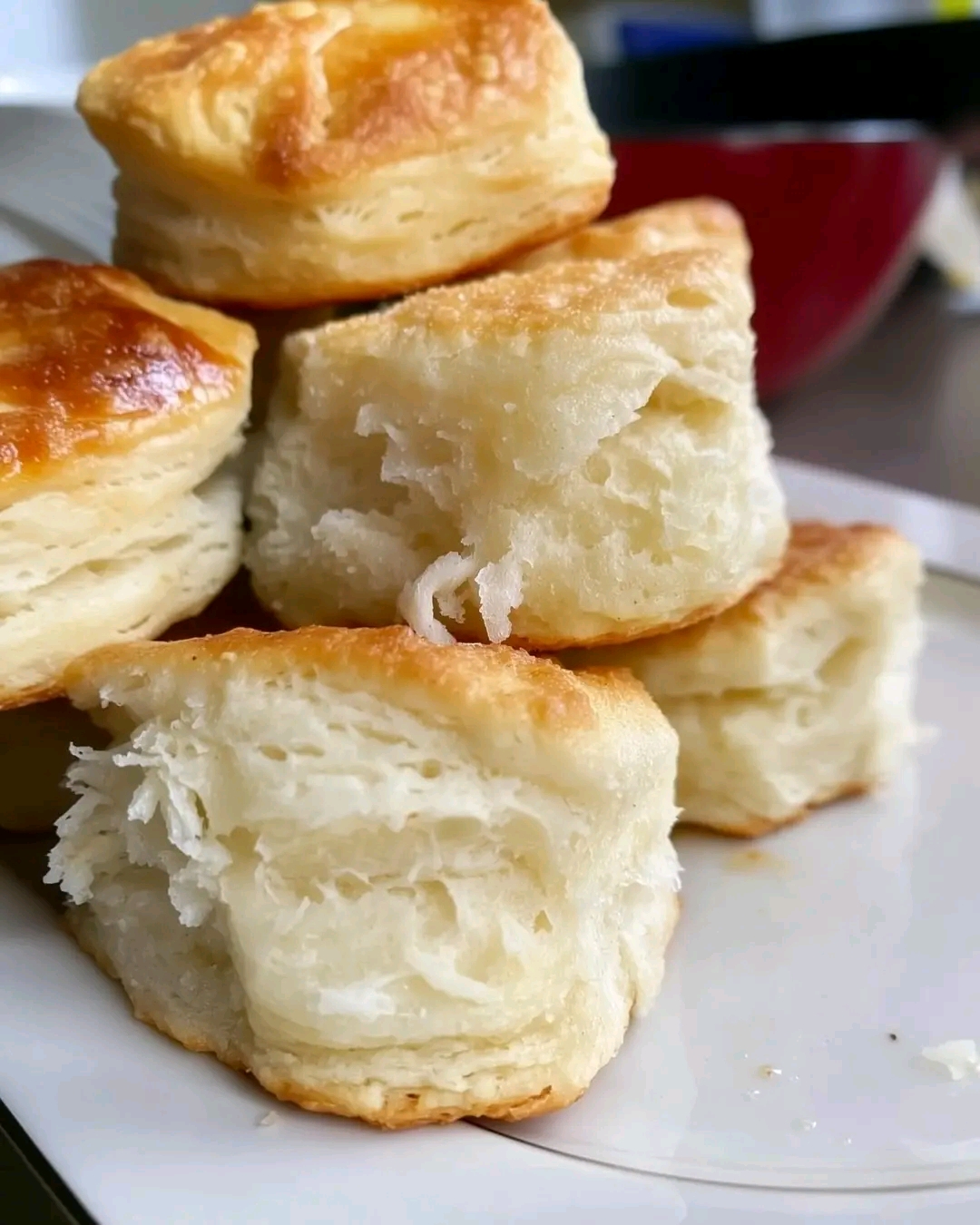
Butter Buttermilk Biscuits

History and Origins of Buttermilk Biscuits
To truly appreciate the buttermilk biscuit, it helps to understand its roots.
Biscuits, in their earliest form, were simple — just flour and water, baked until dry and hard. These were more like hardtack or ship’s biscuits, made for durability, not flavor. Over time, as ingredients like butter, milk, and raising agents became accessible, biscuits evolved.
In the American South, buttermilk biscuits gained prominence in the 19th century. Buttermilk was a byproduct of butter-making; after churning cream, the residual liquid (a sour, fermented milk) was used in cooking. That tangy, slightly acidic liquid became a key ingredient in these biscuits. The acid in buttermilk reacts with baking soda (or baking powder’s acid component) to produce carbon dioxide, helping lift and lighten the dough.
Over time, biscuit recipes varied regionally across the United States. In the Deep South, biscuit-making became a farm-labor tradition, and recipes were passed down through generations. Some families guarded “secret” versions of the biscuit. In fact, one such biscuit tradition, used in Nashville’s Loveless Café, reportedly makes thousands of biscuits daily from a recipe unchanged for decades.
Lucille Elizabeth Bishop Smith, an African American entrepreneur and chef, is credited with inventing the first commercial hot biscuit mix in Texas — an innovation that helped bring biscuit baking to a wider audience.
Thus, buttermilk biscuits are not just a recipe but a piece of culinary heritage. The combination of simple ingredients, technique, and care yields a product that feels both humble and sublime.
What Makes a Great Buttermilk Biscuit?
Before diving into the recipe and method, it helps to understand the qualities of a great biscuit and the roles of the ingredients. Then you’ll see why technique matters so much.
Desired Qualities in a Biscuit
A perfect buttermilk biscuit should have:
- A flaky, layered interior, with distinct lamination (thin layers you can peel apart).
- A tender, moist but not doughy crumb.
- A golden-brown crust that is thin but enough to add texture.
- A mild tang from the buttermilk, but not overpowering.
- Balanced proportions of fat, flour, and liquid so that it rises well and holds structure.
Ingredients and Their Roles
Here is a breakdown of the typical ingredients and what they do:
Flour: Usually all-purpose flour or a softer flour (lower protein) is preferred. Some Southern bakers use “soft wheat” or specialized regional flours with lower protein (e.g. White Lily flour) to yield more tender biscuits. Higher protein flours (bread flour) tend to develop more gluten, which may toughen the biscuit. However, you can still get decent results with standard all-purpose flour, especially if you are careful not to overwork the dough.
Leavening (baking powder / baking soda): Biscuits rely on chemical leavening. Some recipes use baking powder alone; others combine baking powder with baking soda plus the acid from buttermilk. The acid from buttermilk helps activate baking soda, generating carbon dioxide bubbles that lift the dough. Freshness of leavening agents is critical — old or weak baking powder or soda can result in dense, flat biscuits. Many bakers test their baking powder by placing a bit in hot water and seeing if it fizzes vigorously.
Salt: Enhances flavor and controls yeast or leaven reaction. A small but definite amount is essential. Too little and the biscuit will taste flat; too much will hamper rising or result in salty taste.
Fat (butter, shortening, lard, or a combination): Fat is what gives a biscuit tenderness, flavor, and contributes to flakiness. Cold (ideally frozen) fat pieces are cut into the flour so that there are bits of solid fat in the dough; these, when baked, create steam and help lift the layers. Many recipes even grate frozen butter into the flour for better distribution. Some recipes use shortening partly or exclusively (especially older or more forgiving versions), though many modern cooks prefer butter (or a blend) for flavor. Big Mama’s Southern biscuit recipe, for instance, uses shortening because it gives a reliably soft crumb; a touch of butter is added later for flavor.
Buttermilk (or substitute): Provides liquid to hydrate the dough, acidity to react with baking soda, and tang/flavor. The amount must be just enough — too much makes the dough too wet (and tough), too little leads to dry crumb. Some recipes call for “cold buttermilk” to keep fat solid until baking. Some bakers substitute with milk soured with vinegar or lemon juice (let sit 5–10 minutes) as a makeshift buttermilk.
Optional sugar: A small amount (1 to 2 tablespoons) is sometimes added to balance the acidity and enhance browning. Many traditional Southern biscuits omit sugar or use only a touch.
Technique: What Makes or Breaks a Biscuit
The method in biscuit-making is as important as the ingredients. Key technique points include:
- Keep everything cold: The flour, fat, even your tools and bowl should be cold. Warm fat will melt prematurely and ruin the lamination.
- Cut fat into flour properly: Use a pastry cutter, two knives, or even a food processor to distribute fat bits without overheating.
- Minimal mixing: Once you add liquid, you want just enough mixing to bring the dough together. Overmixing develops gluten and will make the biscuit tough.
- Folding and laminating: Many excellent biscuit recipes incorporate folding or “turns” (similar to pastry) to build layers. You roll out, fold, then roll again — repeating a few times to build up internal lamination.
- Cutting without twisting: When you use a biscuit cutter (or glass), press straight down without twisting. Twisting seals the edges, preventing vertical lift.
- Bake at high heat: A hot oven (typically 425°F to 450°F / ~218–232 °C) ensures rapid steam generation and height. Some recipes go higher for initial “blast” to give lift before browning.
- Don’t crowd biscuits: Give them space to expand; if they touch, they may fuse and lose crisp edges.
- Brush with butter (or not): Many bakers brush with melted butter immediately after baking to add flavor and give shine.
With that foundation, let’s move to a step‑by‑step recipe and method.
Classic Buttermilk Biscuit Recipe (Southern Style)
This recipe is a solid “go-to” for about 8 to 10 medium-sized biscuits, depending on size.
Ingredients
- 2 ½ cups all‑purpose flour (preferably low-to-medium protein)
- 1 tablespoon baking powder
- ½ teaspoon baking soda
- ½ teaspoon (or a little more) fine salt
- 1 tablespoon sugar (optional)
- ½ cup (1 stick = 113 g) unsalted butter, cold and cubed (or partially frozen)
- ¾ to 1 cup cold buttermilk
- Extra flour for dusting
- Melted butter for brushing after bake (optional)
Instructions
- Preheat oven
Preheat to 425°F (≈ 218 °C). Place rack in middle of oven. If your oven tends to run low, you may preheat to 450°F and adjust baking time. - Prepare dry ingredients
In a large mixing bowl, whisk together flour, baking powder, baking soda, salt, and sugar (if using). Make sure these are evenly distributed. - Cut in the butter
Add the cold, cubed butter to the dry mix. Use a pastry cutter, two knives, forks, or a stand mixer with paddle to cut or pulse until the mixture resembles coarse crumbs, with pea‑sized and smaller bits of butter still visible. Some recipes even grate frozen butter into the flour for better dispersion. (You want visible flecks of butter, not all broken down.) - Add buttermilk
Pour in cold buttermilk into the flour‐butter mixture. Use a fork or spatula to stir just until the dough begins to come together. The dough will be somewhat shaggy; it should not be too smooth or overworked. - Turn out onto floured surface
Lightly flour your work surface and turn the dough out. Gently press or pat into a rough rectangle about 1 inch thick (or slightly thicker). If the dough is sticky, sprinkle a little more flour—but use sparingly. - Fold and laminate (optional but recommended for flakiness)
Fold the dough in thirds (like folding a letter) or in half, then gently roll again into 1‑inch thickness. Repeat this fold + roll 2 to 3 times. This layering helps produce flakiness. (Some recipes do 3 to 4 folds.) - Final roll and cutting
After the final fold and roll, roll the dough to about ¾‑inch thickness (or your desired biscuit height). Use a 2.5‑ or 3‑inch round biscuit cutter (or similar) pressed straight down (no twisting) to cut biscuits. Gather scraps gently, re‑shape, and cut more biscuits (but don’t overwork scraps). - Place on baking sheet
Place biscuits on a parchment-lined baking sheet or baking stone, leaving space between each biscuit for expansion. - Bake
Bake in the preheated oven for about 12–15 minutes or until tops are golden brown. Rotate pan halfway through bake if your oven has hot spots. If you used a higher initial temperature, adjust bake time accordingly. - Finish with butter (optional)
As soon as the biscuits come out, brush the tops with melted butter if desired. This adds shine, flavor, and gives a lovely soft crust. - Serve warm
Biscuits are best served warm, within the first hour or two. If you have leftovers, they can be reheated or revived in a warm oven.
Notes on Yield and Sizing
- This recipe yields about 8 to 10 medium biscuits (2½–3 inch diameters).
- You can double or triple the recipe in a larger bowl, but be mindful of keeping ingredients cold.
- For smaller “slider” style biscuits, use a smaller cutter and adjust baking time downward by a few minutes.
Advanced Techniques and Variations
Once you’ve mastered the basic recipe, you can play with enhancements, tweaks, and adaptations.
Techniques for Taller, Flakier Biscuits
- More folds / layers: Some biscuit recipes (such as those from St. Anselm) call for 4+ folds with freezing intervals to maximize distinction of internal layers.
- Freezing or chilling between folds: Some bakers chill the dough between folds to ensure butter remains firm, preserve layer structure, and reduce heat from handling.
- Use of grated frozen butter: Grating frozen butter yields smaller, evenly distributed bits that more reliably create lift.
- Bake on a preheated cast iron or baking stone: This gives a spring and initial lift from the bottom. Many biscuit lovers bake in cast iron skillets for that effect.
- Blast bake: Some bakers begin at a very high temperature (e.g. 450–475°F) for the first few minutes to push steam and rise, then reduce.
- Stacked layers method: Some recipes require stacking thin rolled layers of dough (almost like dominos) to promote separation as they bake.
- Brush inside layers with fat: In some versions, a small dab of butter or fat is brushed or folded in between layers to accentuate separation.
Ingredient Variations and Flavor Twists
- Cheese biscuits: Add shredded cheddar, Parmesan, or other cheeses to the dry mix for savory biscuits.
- Herb biscuits: Mix in chopped fresh herbs such as chives, thyme, rosemary, or dill. (Epicurious has a dilled buttermilk biscuit adaptation.)
- Onion or garlic biscuits: Fold in finely minced or caramelized onion or garlic for savory flavor. Bon Appétit has a version with burnt onion butter.
- Whole wheat or partial whole wheat: Use part whole wheat pastry flour, but reduce the amount to maintain lightness.
- Buttermilk + sour cream: Some recipes blend buttermilk with sour cream or Greek yogurt for extra richness.
- Sweet biscuits: Add sugar, vanilla, or dried fruit (e.g. raisins or cranberries) for a breakfast-style biscuit or scone-like twist.
Freezing and Storage
- Freezing unbaked biscuits: Cut your biscuits and place them on a tray to freeze, then transfer to a sealed bag. Bake directly from frozen, adding a few extra minutes to bake time.
- Storing baked biscuits: Wrap biscuits in foil or a sealed bag; avoid airtight unless cooled to avoid sogginess. Reheat in an oven (300–325°F) for a few minutes to refresh.
- Reviving stale biscuits: If biscuits lose their freshness, wrap with a damp paper towel and reheat in the oven or microwave briefly.
Troubleshooting: Common Biscuit Problems & Fixes
Even experienced bakers occasionally face mishaps. Here are common problems and how to fix them.
| Problem | Likely Cause(s) | Solution / Prevention |
|---|---|---|
| Biscuits are dense / heavy / don’t rise well | Old or weak baking powder, overmixing dough, fat too warm, oven too cool, twisting cutter, too thick or too thin dough | Always use fresh leavening (test it), mix minimally, keep ingredients cold, bake at high heat, press cutter straight down, aim for consistent thickness |
| Biscuits are gummy or doughy in center | Underbaked, dough too wet, uneven heating, too much moisture | Bake longer or at higher temp, reduce liquid slightly, ensure oven preheated, avoid crowding |
| Biscuits collapse or flatten after rising | Rapid temperature drop, draft in oven, too much leavening, overproofing, weak dough | Bake promptly, avoid opening oven early, measure leavening carefully, don’t overwork dough |
| Tough biscuits | Overmixing, warm ingredients, too much flour, high-protein flour, under-measured fat | Mix just to combine, chill ingredients, measure flour accurately (fluff, spoon, then level), use low-to-mid protein flour, maintain sufficient fat |
| Uneven color | Hot spots in oven, improperly rotated pan | Rotate pan halfway, use baking stone or even heating surface |
Bakers on forums often troubleshoot their flats or failures: one user reported completely flat, acidic-tasting biscuits and discovered their baking powder was stale. Others say buttermilk biscuits “fall apart” when used as sandwich bases — the fix is a somewhat firmer crust or compacting edges carefully.
If your biscuits are overly sour — keep in mind, buttermilk has a tang by nature — but if the flavor is too strong, check your buttermilk freshness, reduce baking soda, or reduce resting time.
Variations & Notable Recipes
Here are some well-known or interesting biscuit adaptations and recipes to try once you master the classic:
- Clinton St. Baking Company’s buttermilk biscuits: A simple and straightforward version from a beloved NYC brunch spot.
- St. Anselm’s high‑butter, laminated biscuits: Uses many folds, cold butter, and layered technique for ultra‑flaky biscuits.
- Big Mama’s Southern buttermilk biscuits: A family recipe that emphasizes minimal mixing and using shortening for softness.
- Burnt onion buttermilk biscuits: A gourmet twist combining onion flavor with classic biscuits.
- Brenda Gantt’s 3-ingredient biscuits: Using self-rising flour, shortening, and buttermilk—an extremely simplified version.
- Biscuits and sausage gravy: A classic Southern duo—serve biscuits topped with creamy sausage gravy.
Each of these shows how flexible the buttermilk biscuit is.
Serving Suggestions & Pairings
Buttermilk biscuits are versatile and can accompany sweet or savory dishes. Here are ideas:
- Breakfast: with butter, jam, honey, or fruit preserves
- Biscuits and gravy: especially sausage gravy or mushroom gravy for a hearty Southern-style breakfast
- Sandwiches: breakfast biscuit sandwiches with egg, bacon, cheese; or small sliders
- Lunch / Dinner accompaniment: with fried chicken, roast meats, stews, soups, or chili
- Dessert: split biscuits, fill with whipped cream and fruit, like strawberry shortcake
- Gift / sharing: warm biscuits wrapped in cloth make a lovely gift for neighbors or guests
Scaling Up, Batch Baking, and Tips for Efficiency
If you want to make a large batch (for brunch, gatherings, holiday meals), here are some tips:
- Scale ingredients proportionally, but maintain coldness by using chilled bowls or working in batches.
- Use multiple baking sheets and rotate them to maintain even baking.
- Freeze unbaked biscuits on trays, then stack in bags; bake directly from frozen.
- Par‑bake slightly (e.g. 5 minutes) and finish baking later if time is tight.
- Use parchment or silicone mats for ease of cleanup and consistent crust.
- Make the dough the night before and refrigerate (wrapped tightly), then cut and bake in morning. Some recipes allow overnight rest.
Nutrition, Substitutions, and Tips for Healthier Versions
While biscuits are an indulgence, here are considerations and tweaks:
- You can substitute part of butter or fat with a healthier oil or light butter, though you lose some flakiness.
- Use whole wheat pastry flour up to 25–30% to add fiber.
- Use low-fat buttermilk versions (if available), but the fat contributes to texture, so expect slightly different crumb.
- Add flavor with herbs, spices, or small amounts of whole grains or oats.
- Watch portion size; biscuits are energy-dense.
- For lactose sensitivity, some buttermilk alternatives exist (e.g. plant-based cultured liquids), though results will vary.
A Longform Example: St. Anselm–Style Lamination Biscuits
Here’s a more ambitious variant inspired by the St. Anselm method, emphasizing high butter content and multiple folding.
Ingredients (yields ~24 biscuits):
- 5 cups flour, plus more for dusting
- 2 Tbsp + 2 tsp baking powder
- 1 Tbsp kosher salt
- 1 Tbsp sugar
- 1¼ lb unsalted butter (frozen or partially frozen)
- 2 cups cold buttermilk
- ¼ lb melted butter (for brushing)
- Maldon or flaky salt (optional, for tops)
Method (overview):
- Freeze butter and flour mixture to keep everything very cold.
- Mix dry ingredients, add the frozen butter cubes, toss and combine lightly.
- In a stand mixer, add cold buttermilk and mix on medium until dough forms.
- Turn dough onto floured surface, shape into ~1‑inch thick rectangle, fold into thirds, roll again, repeat folding and rolling multiple times (3–4 folds).
- Final roll to about ½‑inch thickness, cut into squares or rounds.
- Bake ~11 minutes, rotate pan, bake ~11 more minutes, brush with butter and optionally sprinkle salt.
This method emphasizes layering and butter quantity for maximum height and texture.
Summary and Final Tips
Buttermilk biscuits are deceptively simple—but the difference between a so-so and a spectacular biscuit is in the details: cold ingredients, minimal mixing, proper folding, correct leavening, and high baking heat.
Some final tips to keep in mind:
- Always test your baking powder / soda before using (freshness matters).
- Keep everything cold — bowls, flour, fat, buttermilk.
- Mix just enough to bring the dough together; avoid overworking.
- Use the cutter straight down, no twisting.
- Preheat your oven fully, bake at high temperature.
- Use folding / lamination for improved flakiness.
- Brush with butter right after baking for flavor and shine.
- Serve as soon as possible; reheat gently to revive.