Follow Me On Social Media!
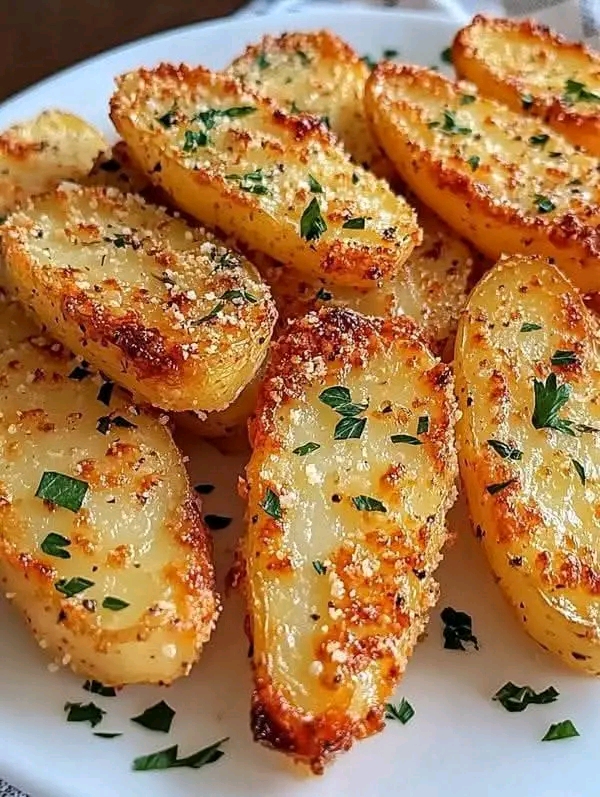
BAKED GARLIC PARMESAN FRIES

Why these fries are worth making
First, the texture: using oven‑baking instead of deep‑frying means you get a crisp exterior and tender interior without a vat of oil, which many recipes insist on. For example, one recipe emphasises that russet potatoes are ideal thanks to high starch and low moisture, helping create fries that are crisp outside and tender inside.
Second, flavour: garlic and parmesan are a classic pairing. Garlic brings aromatic savoury depth; parmesan adds a salty, umami richness. Combine that with a fresh herb like parsley (or rosemary) and you’ve got something special. Some recipes toss the fries after baking in garlic‑infused oil + parmesan then garnish with parsley.
Third, accessibility: The method is simple. You likely already have potatoes, garlic, parmesan, olive oil / butter. The equipment is basic (cutting board, baking sheet, oven). It doesn’t require deep‑frying or specialist gear.
Fourth, versatility: These fries can be served as a side dish (with burgers, grilled meats, sandwiches), as a snack (movie night, game day), or even as part of a party spread. They’re easy to scale.
Finally, healthier-ish: Because they are baked rather than deep‑fried, they use less oil, and if you’re careful with the amount and the type (e.g., olive or avocado oil) you can consider them a lighter alternative to traditional fries. For example, one source notes: “These fries are not only coated in a tantalizing mixture of seasoning and cheese, they’re baked, instead of deep‑fried, for a slightly‑healthier, crispy, golden taste.”
What you’ll get in this guide
- Choosing the right potatoes & prepping them
- Full recipe for baked garlic parmesan fries (ingredients + step‑by‑step)
- Tips & tricks for maximum crispness and flavour
- Variations (spicy, truffle, vegan, sweet potato)
- Serving suggestions and pairings
- Storage & reheating advice
- Common mistakes and how to avoid them
- Frequently asked questions
Let’s get to it.
Choosing the right potatoes & prepping them
Potato type matters. Many recipes emphasise using russet or other “baking potatoes” because they have higher starch and lower moisture, which helps in achieving crisp edges and a fluffy interior. For instance, one source states: “The russet potato is low in moisture and high in starch, making it good for baking, boiling, and making French fries.”
Here are the key points in choosing and prepping:
Size & shape: You’re aiming for piece size that allows even cooking: typically ¼‑inch to ½‑inch thickness (or wider wedges, depending on preference). Uniform size ensures consistent doneness. One recipe suggests slicing into ¼‑inch planks then fries.
Skin on or off: You can leave the skin on for extra texture and rustic appeal (just ensure it’s clean). Some prefer peeling for uniform appearance.
Washing and drying: Wash the potatoes to remove any dirt. Pat them dry thoroughly. Some recipes soak the cut potatoes in cold water to remove excess starch (which can help crispiness). For example, a recipe says: “Soak the cut potatoes in a bowl of cold water and soak for at least 30 minutes to remove excess starch.” After soaking, drain and dry thoroughly — excess moisture will cause steaming rather than crisping.
Cutting: Decide if you want classic “matchstick” fries, or thicker wedges. For thinner fries you might go ¼‑inch thick; for wedges, you may cut them thicker. One variation uses thick‑cut fries.
Pre‑bake oil & seasoning coating: At this stage you’ll coat the fries (before baking) in oil and seasoning so that each piece is well covered. This ensures browning and flavour penetration.
Baking sheet: Use a rimmed baking sheet, ideally lined with parchment paper (or a silicone baking mat) to facilitate crisping and easier cleanup. One source says: “I prefer parchment paper over foil when baking any fries. It doesn’t rip like foil or get sticky. They stay crisp up perfectly!”
Having two baking sheets may help avoid overcrowding if making a large batch, which allows better airflow and crisping. One recipe emphasises dividing the fries between two sheets.
Full recipe for baked garlic parmesan fries
Here’s a detailed recipe you can follow (makes about 4‑6 servings). You can scale up or down as needed.
Ingredients
- 3 large russet potatoes (or about 2 to 2½ lbs) – you may peel them or leave the skins on depending on preference.
- ¼ cup olive oil (plus an additional ~2 Tbsp if following some versions)
- 4 garlic cloves, minced (for the garlic oil infusion)
- Kosher salt, to taste
- Freshly cracked black pepper, to taste
- ¼ cup grated Parmesan cheese (plus extra for garnish if desired)
- 2 Tbsp finely chopped fresh parsley (optional garnish)
Directions
- Preheat your oven to 425 °F (about 220 °C). Some recipes use slightly higher temps (450 °F) for faster browning.
- Mince the garlic cloves. In a small saucepan, heat ¼ cup of olive oil until shimmering. Remove from heat, add the garlic and cook just until lightly golden (be careful not to burn). Remove garlic pieces with a slotted spoon into a small ramekin and retain the oil. (This builds flavour into the oil.)
- Meanwhile, wash the potatoes thoroughly. If leaving the skins on, scrub well. Dry them. If you choose to peel, peel now. Cut the potatoes into strips: for example slice into ¼‑inch thick planks and then into fries, or cut into wedges depending on your preference.
- Optional step for extra crispness: soak the cut potatoes in cold water for 15‑30 minutes to remove excess starch. Then drain and pat completely dry.
- Toss the cut potatoes in a large bowl with the cooled garlic‑infused oil, ensuring each piece is evenly coated. Season generously with salt and pepper.
- Line two rimmed baking sheets with parchment paper (if you have a large quantity of fries). Spread the potatoes in a single layer on the baking sheets, ensuring they don’t overlap too much (crowding leads to steaming, not crisping).
- Bake in the preheated oven for about 30‑35 minutes (or up to 40, depending on thickness) until golden brown and crisp on the outside. Halfway through, rotate the baking sheets (front to back) or flip the fries to promote even browning.
- Immediately upon removing from the oven, while the fries are still hot, toss them with the reserved browned garlic bits, the remaining olive oil (if applicable), the grated Parmesan cheese, and chopped parsley (if using). This ensures the cheese melts a bit and sticks to the warm fries, and the garlic flavour registers.
- Serve immediately, while hot and crisp. Enjoy them on their own, or with your choice of dipping sauce.
Approximate nutrition / serving (varies by portion size): One source quotes 172 kcal per ~1⅓ cups serving, in a lighter version.
Tips & tricks for maximum crispness and flavour
Here are several proven tips to get your fries as good as possible:
- Ensure the fries are cut uniformly so they cook evenly. Unequal sizes lead to some pieces overcooked while others undercooked.
- Do not overcrowd the baking sheet. A single layer allows hot air to circulate, enabling crisping rather than steaming. Many recipes emphasise that point.
- Use parchment paper or a silicone mat rather than foil. One recipe says foil can rip or get sticky; parchment is better.
- Use a high oven temperature (425‑450 °F) for good browning. Higher heat helps crisp the exterior while keeping the interior tender.
- Flip or rotate the fries halfway through baking to encourage even browning on all sides.
- Toss the fries immediately after baking with the garlic and cheese. Doing this while the fries are still hot helps melt the cheese slightly and helps the flavour stick. Some recipes emphasise doing it right out of the oven.
- For extra crispiness, you can soak the potatoes before baking to remove some starch (though some experienced cooks debate whether it helps significantly, but it doesn’t hurt).
- Use freshly grated Parmesan rather than pre‑grated (which may contain anti‑caking agents and melt less well).
- Season properly: Parmesan is salty and flavourful, but balancing with fresh garlic, black pepper, and optional herbs (parsley, rosemary, thyme) elevates the profile.
- Serve immediately: Fries are best when hot and crisp. Leftover fries will lose their crunch unless reheated properly (see storage section).
Variations on the theme
You can easily modify the base recipe to match different flavour profiles or dietary needs. Here are some ideas:
Spicy version: Add cayenne pepper, paprika, chili powder, or red pepper flakes to the seasoning. For example one recipe for baked Cajun garlic parmesan fries uses paprika plus cayenne pepper.
Truffle & gourmet twist: Drizzle a little truffle oil on the cooked fries, or use truffle parmesan blend for a decadent upgrade. One article referenced a garlic‑truffle‑parmesan version that brought a gourmet touch.
Herbaceous variation: Use fresh rosemary or thyme along with or instead of parsley. For example, one recipe uses rosemary, garlic, and Parmesan for fries.
Sweet potato version: Use sweet potatoes instead of russets for a slightly sweeter, more vitamin‑rich alternative. The trick is to pay attention because sweet potatoes crisp differently (use slightly lower heat or shorter bake time). One article mentions “Sweet Potato Version: Use sweet potatoes instead of russets for a sweeter, vitamin‑rich version.”
Vegan or dairy‑free: Substitute dairy Parmesan with a vegan Parmesan‑style cheese (or nutritional yeast + salt) and use plant‑based butter or oil for the garlic coating. One reddit post shows how to make baked garlic parmesan fries with vegan parmesan.
Frozen‑fries shortcut: If you don’t have fresh potatoes or want quicker method, start with frozen fries, bake according to package instructions, then toss with garlic, olive oil, parmesan and parsley at the end. For example, one blog did exactly that: 500 g frozen fries, 5 cloves garlic, 1 tbsp olive oil etc.
Serving suggestions & pairings
Here are some of my favourite ways to serve these baked garlic parmesan fries: - As a side dish to burgers (beef, turkey, veggie), grilled chicken, steak or fish.
- As a snack or appetizer: serve in paper cones or baskets with dipping sauces like garlic aioli, sriracha‑mayo, ranch, ketchup, or pesto mayo.
- With sandwiches: pair with a club sandwich, pulled pork, grilled cheese or panini.
- Game‑night or party food: lay out a platter of the fries, provide different dipping sauces and let guests help themselves.
- Build into a loaded‑fries version: top with toppings like chopped fresh basil or parsley, extra parmesan, crumbled bacon, sliced green onions, or even gooey melted mozzarella or cheddar for a “loaded garlic parmesan fries” twist.
- Brunch version: serve alongside fried or poached eggs, avocado, and roasted tomatoes — the fries bring a crisp contrast.
Storage & reheating advice
Because fries lose crispness over time (especially when reheated poorly), storage and reheating are important if you have leftovers (though let’s be honest: they’re so good you’ll probably finish them!).
Storage: Cool the fries to room temperature. Store in an airtight container in the fridge for up to 2–3 days. One source notes this timeframe.
Reheating: - The best way: Preheat oven to ~425 °F, spread the fries in a single layer on a baking sheet, and bake until hot and crisp again (about 5‑10 minutes). The same source says: “When ready to serve, preheat the oven to 425 F … bake the fries until crisp and heated through.”
- Alternatively, use an air fryer if you have one: ~350‑400 °F for 3‑5 minutes gives good results.
- Avoid reheating in microwave as it will make fries soggy. One article explicitly says: “The one thing you shouldn’t do is attempt to reheat your fries in the microwave, which may get the fries hot, but will also leave them soggy.”
Common mistakes to avoid - Cutting pieces unevenly: If some fries are much thicker than others, the thinner ones will burn while the thicker ones remain undercooked.
- Overcrowding the baking sheet: When they sit too close or overlap, instead of crisping you’ll get steaming and soft fries.
- Not drying the potatoes properly (especially if you soaked them): Moisture on the surface prevents good browning and crisps.
- Using too little oil or uneven coating: Without sufficient oil each fry won’t brown evenly; one key flavour vehicle is the garlic‑infused oil.
- Skipping the toss with cheese and garlic immediately after baking: Doing it while still hot helps the cheese melt and adhere; delaying means the cheese may sit like a powder and the flavour and texture won’t integrate as well.
- Serving late: The moment you pull them from the oven is when they’re at their peak; serving them after a long wait means they’ll lose crispness.
- Reheating poorly: Microwaving fries = soggy fries. Use oven or air fryer.
Frequently asked questions (FAQ)
Q: Can I use sweet potatoes instead of russets?
A: Yes, you can. Sweet potatoes bring a naturally sweeter flavour and more vitamins. However, note that they often require slightly different bake times (they crisp differently) and you may want to adjust oil amount or baking time accordingly.
Q: Do I need to soak the potato pieces in water?
A: It’s optional. Some cooks swear by it for extra crispness (removing starch helps), while others skip it and still get excellent results. If you do soak, make sure to dry them thoroughly before coating in oil.
Q: Can I make these ahead of time?
A: You can partially prepare (cut the potatoes, maybe soak and dry) ahead of time, but it’s best to bake close to serving time so they stay crisp. If you bake early and store, you will need to re‑crisp in the oven or air fryer before serving.
Q: What if I only have frozen fries?
A: You can definitely use frozen fries for convenience: bake or cook them per package instructions until almost done, then while still hot toss with garlic oil, parmesan, parsley etc. Example: one blog used 500 g US frozen potato fries and then added garlic, parmesan, parsley and served with sriracha mayo.
Q: How can I make them gluten‑free?
A: Potatoes, garlic, olive oil and parmesan are naturally gluten‑free. Just ensure your parmesan cheese and any added seasonings/dipping sauces do not contain hidden gluten. For a vegan/plant‑based alternative, use vegan parmesan and plant‑based butter/oil.
Q: What dipping sauce pairs best?
A: Many options: garlic aioli (garlic mayonnaise), sriracha mayo, ranch, ketchup, pesto mayo, or even a yoghurt‑herb dip. If you’re going gourmet, a truffle‑mayo or garlic‑lemon aioli elevates the experience.
Final word
There you have it: a full guide to making irresistible baked garlic parmesan fries. These deliver on flavour and texture while being relatively simple to prepare. The key to success lies in the details: choosing the right potatoes, cutting them evenly, drying them if you soak, using the right oil/garlic infusion, baking at a high temperature, avoiding overcrowding, and tossing with freshly grated parmesan and herbs right out of the oven. Whether you serve them alongside a burger, as a snack at a party, or just treat yourself, these fries will shine. Give them a try tonight — and get ready for the compliments.
If you like, I can also provide a printable recipe card or a video tutorial. Would you like that?