
Follow Me On Social Media!
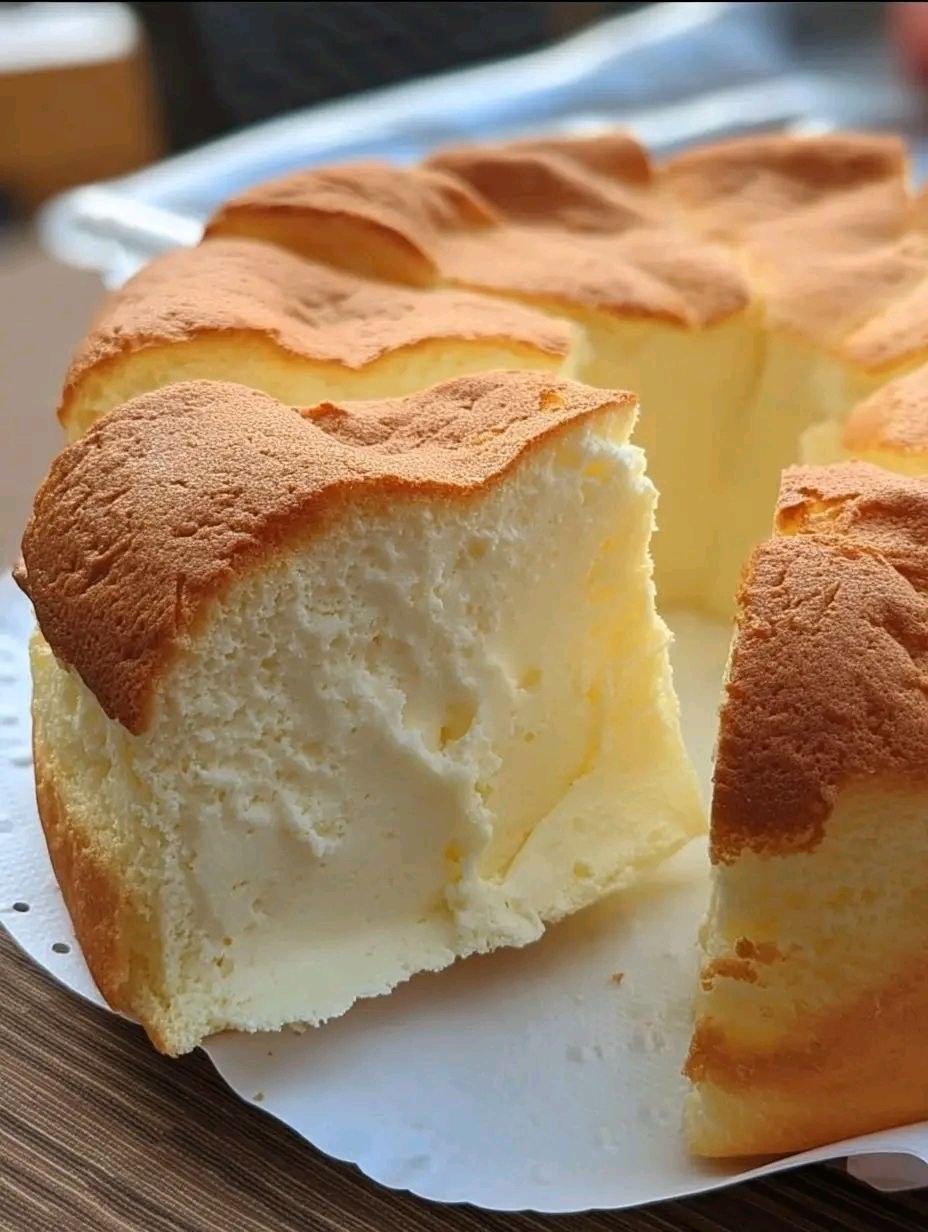
Pan de nube esponjoso y suave

Introduction
Imagine a cake so ethereal, so light, it feels like biting into a cloud. That, my friends, is exactly what we’re creating today: the magnificent Pan de Nube Esponjoso y Suave, or Fluffy and Soft Cloud Bread! This isn’t just any cake; it’s a culinary experience that melts in your mouth, leaving behind a whisper of sweetness and an unforgettable lightness. Forget dense, heavy desserts – this cloud bread is here to redefine your notion of indulgence with its delicate, airy texture and subtle, comforting flavor.
Cloud bread has captivated bakers and dessert lovers worldwide for its unique characteristics. Its charm lies in its simplicity and the masterful way it transforms humble ingredients, primarily egg whites, into a towering, airy confection. This recipe, often compared to angel food or chiffon cake but with its own distinct personality, is perfect for any occasion – from a light afternoon tea treat to an elegant dessert centerpiece. Its appeal is universal: it’s naturally low in fat, incredibly satisfying without being heavy, and utterly delightful to both prepare and devour.
Prepare to embark on a baking journey that prioritizes technique and patience, rewarding you with a cake that truly lives up to its name. We’ll guide you through each crucial step, from achieving perfectly whipped egg whites to the gentle art of folding, ensuring your Pan de Nube rises to fluffy perfection. Get ready to impress your taste buds and your guests with this seemingly magical dessert!
Nutritional Information
Per serving (approximate values):
- Calories: 180
- Protein: 5g
- Carbohydrates: 35g
- Fat: 3g
- Fiber: 0g
- Sodium: 60mg
Ingredients
- 1 cup (120g) cake flour, sifted
- 1 1/2 cups (300g) granulated sugar, divided
- 1 teaspoon baking powder
- 1/2 teaspoon salt
- 1/2 cup (120ml) water
- 1/4 cup (60ml) vegetable oil (or other neutral oil)
- 1 teaspoon vanilla extract
- 7 large egg whites (about 210g), at room temperature
- 1/2 teaspoon cream of tartar
- Powdered sugar for dusting (optional)
Instructions
- Preheat your oven to 325°F (160°C). Have an ungreased 10-inch tube pan (angel food cake pan) ready. Do not grease the pan, as the batter needs to cling to the sides to rise properly.
- In a large bowl, whisk together the sifted cake flour, 1 cup (200g) of the granulated sugar, baking powder, and salt until well combined. Set aside.
- In a separate medium bowl, whisk together the water, vegetable oil, and vanilla extract.
- Pour the wet ingredients into the dry ingredients. Whisk gently until just combined and smooth. Do not overmix. Set this batter aside.
- In a very clean, grease-free large mixing bowl (preferably a stand mixer bowl), add the room temperature egg whites and cream of tartar.
- Using an electric mixer with the whisk attachment, beat the egg whites on medium speed until soft peaks form.
- Gradually add the remaining 1/2 cup (100g) of granulated sugar, one tablespoon at a time, while continuing to beat on medium-high speed.
- Continue beating until the egg whites are glossy and form stiff, firm peaks. When you lift the whisk, the peaks should hold their shape without drooping. Be careful not to overbeat, as this can make them dry.
- Add about one-third of the whipped egg whites to the flour mixture. Fold gently with a spatula until just combined. This lightens the batter.
- Add the remaining whipped egg whites in two additions, folding gently after each addition. Use a cutting motion, bringing the spatula down through the center of the mixture, across the bottom, and up the side of the bowl. Rotate the bowl as you fold. The goal is to incorporate the egg whites without deflating them, maintaining as much air as possible. Stop folding as soon as no streaks of egg white remain.
- Carefully pour the batter into the ungreased tube pan. Gently smooth the top with a spatula.
- Bake for 50-60 minutes, or until the cake is golden brown, springs back when lightly touched, and a wooden skewer inserted into the center comes out clean.
- Immediately after removing from the oven, invert the tube pan over the neck of a bottle or onto its “feet” if it has them. This prevents the cake from collapsing as it cools.
- Allow the cake to cool completely upside down for at least 1.5 to 2 hours, or until completely cool.
- Once completely cool, run a thin knife or offset spatula around the edges of the pan and around the center tube to loosen the cake. Invert the cake onto a serving plate.
- Dust with powdered sugar before serving, if desired. Slice with a serrated knife for best results.
Cooking Tips and Variations
Room Temperature Egg Whites are Key: This is perhaps the most crucial tip. Cold egg whites will not whip up to their full volume. Take them out of the refrigerator at least 30 minutes to an hour before you plan to bake. For a quicker method, place the eggs (still in their shells) in a bowl of warm water for 5-10 minutes.
Clean Tools, No Grease: Any trace of fat or grease in your mixing bowl or on your whisk can prevent egg whites from whipping properly. Ensure your equipment is impeccably clean and dry. Using a glass or metal bowl is often preferred over plastic, as plastic can sometimes retain greasy residues.
Do Not Overmix the Batter: Once you add the wet ingredients to the dry, mix only until just combined. Overmixing develops gluten in the flour, leading to a tougher, less tender cake. The same applies when folding in the egg whites; fold only until no streaks remain.
Gentle Folding Technique: The air in your whipped egg whites is what makes this cake so fluffy. When folding, use a light hand. Imagine you’re “cutting” through the batter with your spatula and then “lifting” it over. Do not stir or beat the mixture.
Proper Pan Choice and No Grease: An ungreased tube pan with a removable bottom is essential. The batter needs to cling to the sides of the pan to climb high and achieve its characteristic volume. If you grease the pan, the cake will likely slide down and deflate.
Cooling Upside Down: This step is non-negotiable for cloud bread and similar airy cakes. Cooling the cake upside down prevents it from collapsing under its own weight as it sets, preserving its delicate structure.
Don’t Open the Oven Door: Resist the urge to peek during the first 40 minutes of baking. A sudden drop in temperature can cause the cake to fall.
Flavor Variations:
- Citrus Zest: Add 1-2 teaspoons of finely grated lemon, orange, or lime zest to the dry ingredients for a bright, refreshing flavor.
- Almond Extract: Substitute half of the vanilla extract with almond extract for a nutty aroma.
- Cocoa Cloud: Sift 1/4 cup (20g) of unsweetened cocoa powder with the cake flour for a light chocolate version.
- Spiced Cloud: Add 1/2 teaspoon of ground cinnamon or a pinch of nutmeg to the dry ingredients for a warm, comforting twist.
Serving Suggestions:
- Dust simply with powdered sugar.
- Serve with fresh berries and a dollop of lightly sweetened whipped cream.
- Drizzle with a light fruit sauce or a chocolate ganache.
Storage and Reheating
Storage: Pan de Nube is best enjoyed the day it’s made, when its texture is at its peak lightness. However, if you have leftovers, store them properly to maintain as much of their delicate texture as possible.
- At Room Temperature: Place the cake (whole or sliced) in an airtight container. It will stay fresh for 1-2 days. Avoid refrigerating if possible, as the cold air can dry out the cake and alter its texture, making it slightly firmer.
- Freezing: Cloud bread freezes surprisingly well. Wrap individual slices or the entire cake tightly in plastic wrap, then an additional layer of aluminum foil. Freeze for up to 1 month.
Reheating:
- From Room Temperature: No reheating is necessary. Simply serve as is.
- From Frozen: For best results, thaw frozen slices or the whole cake unwrapped at room temperature for a few hours (slices) or overnight (whole cake). Avoid using a microwave for thawing or reheating, as it can make the cake rubbery.
Frequently Asked Questions
Why did my cloud bread collapse or not rise?
There are several common culprits for a collapsed or flat cloud bread. The most frequent reasons include: not whipping the egg whites to stiff enough peaks, over-folding the batter (which deflates the egg whites), using a greased pan (which prevents the batter from climbing), opening the oven door too early during baking, or not cooling the cake upside down immediately after baking.
Can I make this recipe with all-purpose flour?
While you can use all-purpose flour, it will result in a slightly denser cake. Cake flour has a lower protein content, which is essential for achieving the incredibly light and tender crumb characteristic of cloud bread. If you only have all-purpose flour, you can try creating a makeshift cake flour by removing 2 tablespoons of all-purpose flour from each cup and replacing it with 2 tablespoons of cornstarch, then sifting well.
How do I know when the egg whites are at “stiff peaks”?
Stiff peaks mean that when you lift the whisk out of the egg whites, the peaks that form stand up straight and hold their shape firmly. They should look glossy and smooth. If they look dry or crumbly, they’ve been overbeaten. If they flop over, they need more beating.
Can I add fruit or other mix-ins to the batter?
It’s generally not recommended to add heavy mix-ins like whole fruits or chocolate chips directly into the batter. The delicate structure of cloud bread relies on its lightness, and heavier additions can cause the cake to sink. It’s best to serve fruits, sauces, or other toppings alongside or on top of the baked and cooled cake.