
Follow Me On Social Media!
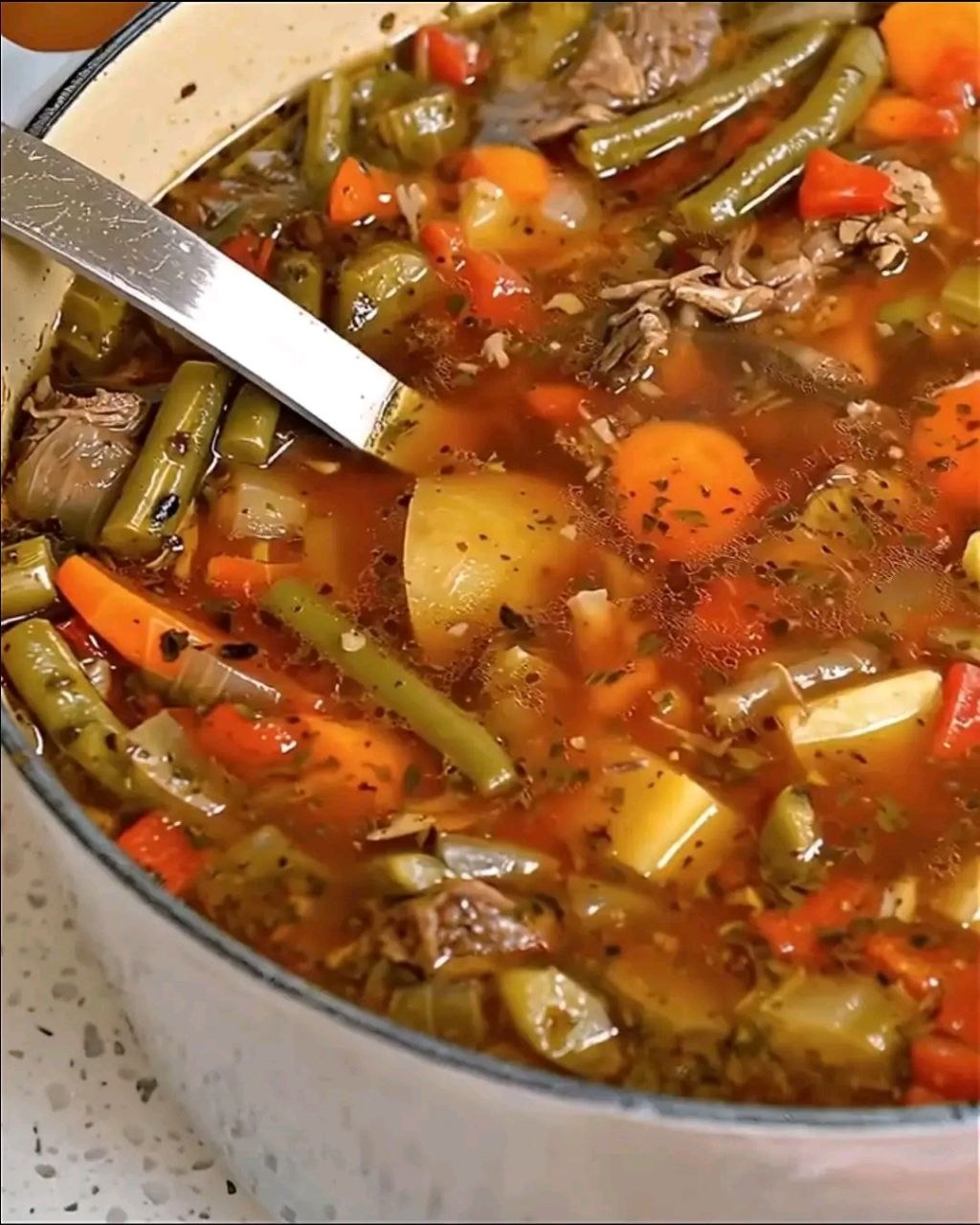
Vegetable Beef Soup Recipe

Introduction
There are few dishes that evoke the same sense of warmth, comfort, and home as a hearty bowl of Vegetable Beef Soup. This classic, soul-satisfying meal is a beloved staple in countless kitchens for good reason. It’s a culinary hug in a bowl, perfect for chasing away the chill of a cold evening, nourishing a busy family, or simply enjoying a delicious, wholesome dinner. The beauty of Vegetable Beef Soup lies in its irresistible combination of tender, fall-apart beef, an abundance of fresh, vibrant vegetables, and a rich, savory broth that has simmered to perfection, infusing every spoonful with incredible depth of flavor.
What makes this particular Vegetable Beef Soup recipe truly special is its focus on building layers of flavor from the very beginning. We start by expertly browning the beef to create a deep, caramelized crust, a crucial step that locks in moisture and develops a robust foundation for the entire soup. Then, we introduce aromatic vegetables like onions, celery, and garlic, sautéing them until fragrant to form a flavorful base. The careful selection of vegetables, from starchy potatoes and sweet carrots to crisp green beans and bright diced tomatoes, ensures a delightful textural contrast and a spectrum of nutrients in every bite. This isn’t just a soup; it’s a complete, satisfying meal that’s both incredibly delicious and wonderfully nourishing.
Beyond its comforting qualities, Vegetable Beef Soup is also remarkably versatile and practical. It’s an excellent way to utilize seasonal produce or those lingering vegetables in your fridge, making it a budget-friendly and waste-reducing option. This recipe is designed to be straightforward enough for novice cooks while offering enough depth and flavor to impress seasoned chefs. Whether you’re gathering your family around the dinner table, preparing a meal for a potluck, or simply looking for a delicious and healthy make-ahead option, this Vegetable Beef Soup is guaranteed to become a cherished addition to your recipe repertoire. Get ready to fill your kitchen with an aroma that promises pure deliciousness!
Nutritional Information
Per serving (approximate values):
- Calories: 380
- Protein: 35g
- Carbohydrates: 30g
- Fat: 15g
- Fiber: 7g
- Sodium: 650mg
Ingredients
- 2 tablespoons olive oil or vegetable oil
- 2 pounds beef chuck roast, trimmed and cut into 1-inch cubes
- 1 large yellow onion, chopped
- 2 carrots, peeled and sliced into 1/2-inch rounds
- 2 celery stalks, chopped
- 3 cloves garlic, minced
- 6 cups beef broth, high quality
- 1 (14.5 ounce) can diced tomatoes, undrained
- 1 (6 ounce) can tomato paste
- 1 teaspoon dried thyme
- 1/2 teaspoon dried rosemary, crushed
- 1 bay leaf
- 1/2 teaspoon salt, or to taste
- 1/4 teaspoon black pepper, or to taste
- 3 medium potatoes (russet or Yukon Gold), peeled and cut into 1-inch cubes
- 1 cup fresh or frozen green beans, trimmed and cut into 1-inch pieces
- 1/2 cup fresh or frozen corn kernels
- 1/4 cup fresh parsley, chopped, for garnish (optional)
Instructions
- Pat the beef cubes thoroughly dry with paper towels. This step is crucial for achieving a good sear. Season the beef generously with salt and pepper.
- Heat the olive oil in a large Dutch oven or heavy-bottomed pot over medium-high heat. Once the oil is shimmering, add about half of the beef cubes in a single layer, ensuring not to overcrowd the pot. Sear the beef for 3-4 minutes per side, until deeply browned on all surfaces. Remove the browned beef to a plate and repeat with the remaining beef.
- Reduce the heat to medium. Add the chopped onion, carrots, and celery to the pot. Sauté for 5-7 minutes, stirring occasionally, until the vegetables begin to soften and the onion becomes translucent. Scrape up any browned bits from the bottom of the pot with a wooden spoon as you stir; these are packed with flavor.
- Add the minced garlic to the pot and cook for another 1 minute, until fragrant, being careful not to burn it.
- Pour in the beef broth, scraping the bottom of the pot once more to release any remaining flavorful browned bits. Stir in the canned diced tomatoes (with their juice), tomato paste, dried thyme, crushed rosemary, and bay leaf.
- Return the browned beef to the pot, along with any accumulated juices from the plate. Bring the soup to a gentle boil, then reduce the heat to low, cover, and let it simmer for at least 1 hour, or up to 1.5 hours. This simmering time allows the beef to become tender and the flavors to meld.
- After 1 to 1.5 hours, add the cubed potatoes to the soup. Continue to simmer, covered, for another 15-20 minutes, or until the potatoes are fork-tender.
- Stir in the green beans and corn kernels. Cook for an additional 5-7 minutes, or until the green beans are tender-crisp and the corn is heated through.
- Taste the soup and adjust seasonings as needed, adding more salt and pepper if desired. Remove and discard the bay leaf before serving.
- Ladle the hot soup into bowls. Garnish with fresh chopped parsley, if using, and serve immediately.
Cooking Tips and Variations
To truly elevate your Vegetable Beef Soup, remember that the foundation of flavor is key. Always take the time to properly brown your beef; this caramelization creates a depth of flavor that cannot be replicated. Patting the beef dry before searing is essential for a good crust. When sautéing your aromatic vegetables like onions, carrots, and celery, allow them to soften and release their natural sugars, which sweetens the soup base. Don’t rush this step. For an even more robust broth, consider using homemade beef stock if you have it available, or choose a high-quality, low-sodium store-bought broth and adjust the salt later.
For variations, this recipe is incredibly adaptable. If you prefer a thicker soup, you can remove about 1 cup of the cooked potatoes and mash them, then stir them back into the soup. Alternatively, you can create a quick slurry with 1 tablespoon of cornstarch mixed with 2 tablespoons of cold water and stir it into the simmering soup during the last 5 minutes of cooking until it thickens to your desired consistency. To add more protein and fiber, consider stirring in a can of drained and rinsed kidney beans or cannellini beans during the last 15 minutes of cooking. For a touch of heat, a pinch of red pepper flakes can be added with the other dried herbs. You can also experiment with different vegetables based on what’s in season or what you have on hand – try adding diced zucchini, chopped cabbage, or peas. For an extra layer of umami, a tablespoon of Worcestershire sauce or a splash of red wine can be added along with the beef broth.
Storage and Reheating
Vegetable Beef Soup is an excellent make-ahead meal, as its flavors tend to deepen and improve overnight. To store, allow the soup to cool completely to room temperature before transferring it to an airtight container. Refrigerate promptly within two hours of cooking. It will keep well in the refrigerator for 3-4 days. For longer storage, this soup freezes beautifully. Portion the cooled soup into freezer-safe containers or heavy-duty freezer bags, leaving about an inch of headspace to account for expansion. It can be stored in the freezer for up to 3 months. Thaw frozen soup overnight in the refrigerator before reheating.
To reheat, if refrigerated, simply pour the desired amount of soup into a saucepan and warm over medium heat, stirring occasionally, until heated through. If reheating from frozen, you can gently warm it in a saucepan over low heat, stirring frequently, until thawed and hot. Alternatively, individual portions can be reheated in the microwave. Place the soup in a microwave-safe bowl, cover loosely, and heat on high for 2-3 minutes, stirring halfway through, until piping hot. Add a splash of extra beef broth or water if the soup has thickened too much during storage.
Frequently Asked Questions
Can I use different cuts of beef for this soup?
While beef chuck roast is highly recommended for its flavor and tenderness when slow-cooked, you can absolutely use other cuts. Beef stew meat, often pre-cut, is a convenient option. If using a leaner cut like sirloin, be mindful not to overcook it, as it can become tough. For best results, stick with cuts that benefit from longer cooking times to achieve that melt-in-your-mouth texture.
What if my soup isn’t thickening enough?
If you prefer a thicker soup, there are a few easy fixes. You can mash some of the cooked potatoes against the side of the pot with a spoon, or remove about a cup of soup, blend it, and return it to the pot. Another method is to create a cornstarch slurry: mix 1 tablespoon of cornstarch with 2 tablespoons of cold water until smooth, then stir it into the simmering soup during the last 5-10 minutes of cooking. Let it simmer gently until it reaches your desired consistency.
Can I make this soup in a slow cooker?
Yes, you can adapt this recipe for a slow cooker! First, complete steps 1-4 (browning the beef and sautéing the aromatics) on the stovetop, as these steps are crucial for flavor development. Transfer the browned beef and sautéed vegetables to your slow cooker. Add the beef broth, diced tomatoes, tomato paste, herbs, salt, and pepper. Cook on low for 6-8 hours or on high for 3-4 hours, until the beef is tender. During the last 30-45 minutes of cooking, stir in the potatoes, green beans, and corn, and continue cooking until the vegetables are tender.
Can I add pasta or grains to the soup?
Absolutely! Adding pasta or grains can make the soup even heartier. Small pasta shapes like elbow macaroni, ditalini, or small shells work well. If adding pasta, stir it in during the last 10-15 minutes of cooking, or according to package directions, to prevent it from becoming mushy. For grains like barley or farro, they will need a longer cooking time, usually stirred in with the potatoes, around 30-45 minutes before the end of cooking, to ensure they are fully tender.