Follow Me On Social Media!
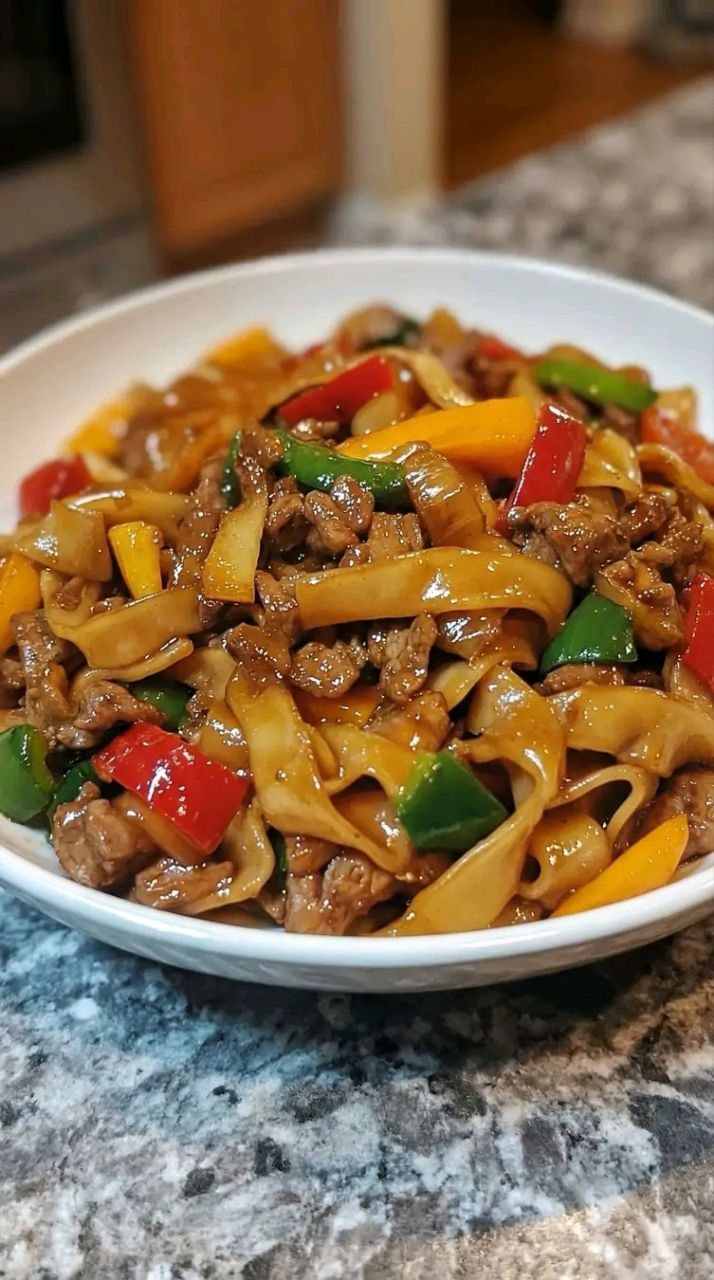
Italian Drunken Noodles

Introduction
Get ready to have your taste buds embark on an unforgettable journey! Today, we’re diving headfirst into a culinary adventure that takes a beloved Thai street food classic and gives it a distinctly Italian twist. We’re talking about “Italian Drunken Noodles” – a fusion dish that marries the vibrant, savory-sweet-spicy complexity of traditional Pad Kee Mao with the rich, aromatic heart of Italian cuisine. Forget everything you thought you knew about noodle dishes, because this recipe is about to redefine your weeknight dinner game with an explosion of unexpected yet harmonious flavors.
Drunken noodles, or Pad Kee Mao as it’s known in Thailand, is famous for its wide, chewy noodles, robust sauce, and often a generous kick of spice. Our Italian interpretation keeps that spirit alive but infuses it with Mediterranean charm. Imagine tender slices of beef, crisp bell peppers, and wide, satisfying pasta, all enveloped in a glossy, savory sauce deepened by the fragrant notes of Italian herbs and, yes, a splash of wine – the “drunken” element that truly elevates this dish. This isn’t just a meal; it’s a conversation starter, a testament to how incredible global flavors can be when they come together in a delicious dance.
What makes these “Italian Drunken Noodles” so special? It’s the ingenious blend of familiar comforts with exciting new sensations. We’re swapping out traditional Thai basil and fish sauce for aromatic Italian herbs, a rich tomato paste base, and a dry Italian wine that deglazes the pan, adding depth and a subtle tang. The result is a dish that feels both comforting and exotic, quick enough for a busy Tuesday but impressive enough for a casual dinner party. Prepare to be amazed by how effortlessly these two culinary worlds collide to create something truly spectacular.
Nutritional Information
Per serving (approximate values):
- Calories: 620
- Protein: 45g
- Carbohydrates: 60g
- Fat: 25g
- Fiber: 6g
- Sodium: 850mg
Ingredients
- 1 pound wide Italian pasta (such as pappardelle, fettuccine, or tagliatelle)
- 1 pound beef sirloin or flank steak, thinly sliced against the grain
- 2 tablespoons olive oil, divided
- 1 large red bell pepper, thinly sliced
- 1 large green bell pepper, thinly sliced
- 1 large yellow bell pepper, thinly sliced
- 1 medium yellow onion, thinly sliced
- 4 cloves garlic, minced
- 1 tablespoon fresh ginger, grated
- 1/4 cup dry red wine (such as Chianti or Merlot)
- 1/4 cup low-sodium beef broth
- 2 tablespoons tomato paste
- 1 tablespoon soy sauce (or tamari for gluten-free)
- 1 tablespoon Worcestershire sauce
- 1 teaspoon dried oregano
- 1 teaspoon dried basil
- 1/2 teaspoon red pepper flakes (adjust to taste)
- 1/4 teaspoon black pepper
- Salt to taste
- 2 tablespoons fresh parsley, chopped, for garnish
- 1/4 cup grated Parmesan cheese, for serving
Instructions
- Prepare the Beef: Pat the thinly sliced beef dry with paper towels. In a medium bowl, toss the beef with 1 tablespoon of olive oil, 1/2 teaspoon of salt, and 1/4 teaspoon of black pepper. Set aside.
- Cook the Pasta: Bring a large pot of salted water to a rolling boil. Add the wide Italian pasta and cook according to package directions until al dente. Drain the pasta, reserving about 1/2 cup of the pasta water, and set aside. Do not rinse the pasta.
- Sauté the Vegetables: Heat the remaining 1 tablespoon of olive oil in a large skillet or wok over medium-high heat. Add the sliced red, green, and yellow bell peppers and sliced onion. Sauté for 4-5 minutes until the vegetables are tender-crisp. Remove the vegetables from the skillet and set aside.
- Sear the Beef: Add the seasoned beef to the hot skillet in a single layer, working in batches if necessary to avoid overcrowding. Sear for 1-2 minutes per side until browned, but still slightly pink in the center. Remove the beef from the skillet and set aside with the vegetables.
- Build the Sauce Base: Reduce the heat to medium. Add the minced garlic and grated ginger to the skillet. Sauté for 1 minute until fragrant, being careful not to burn the garlic.
- Deglaze with Wine: Pour in the dry red wine, scraping up any browned bits from the bottom of the pan with a wooden spoon. Let the wine simmer and reduce by half, about 2-3 minutes.
- Whisk in Sauce Ingredients: Add the beef broth, tomato paste, soy sauce, Worcestershire sauce, dried oregano, dried basil, and red pepper flakes to the skillet. Whisk well to combine and bring the sauce to a gentle simmer. Cook for 2-3 minutes, allowing the sauce to thicken slightly. If the sauce seems too thick, add a tablespoon or two of the reserved pasta water.
- Combine and Toss: Return the cooked pasta, seared beef, and sautéed vegetables to the skillet with the sauce. Toss everything together vigorously to ensure the pasta and ingredients are evenly coated with the sauce. If the mixture seems too dry, add more reserved pasta water, 1 tablespoon at a time, until the desired consistency is reached.
- Taste and Season: Taste the “Italian Drunken Noodles” and adjust seasoning as needed. Add more salt, pepper, or red pepper flakes if desired.
- Serve: Divide the “Italian Drunken Noodles” among serving plates. Garnish generously with fresh chopped parsley and a sprinkle of grated Parmesan cheese. Serve immediately and enjoy!
Cooking Tips and Variations
To achieve the best possible “Italian Drunken Noodles,” consider these tips. For the beef, a tender cut like sirloin or flank steak is ideal. Slicing it thinly and against the grain will ensure it cooks quickly and remains tender. Don’t overcrowd the pan when searing the beef; working in batches allows for a proper sear, resulting in delicious browned bits that add flavor to your sauce. When cooking the pasta, aim for al dente, as it will continue to cook slightly when tossed with the hot sauce. Reserving pasta water is a crucial step; this starchy liquid is your secret weapon for achieving a silky, emulsified sauce that clings beautifully to the noodles.
For variations, the possibilities are endless. If you prefer chicken, slice boneless, skinless chicken breast or thigh and cook it similarly to the beef. For a vegetarian option, swap the beef for firm tofu or tempeh, pressed and cubed, then pan-fried until golden. You can also load up on more vegetables: consider adding sliced mushrooms, zucchini, or spinach during the last few minutes of cooking. If you like more heat, increase the red pepper flakes or add a dash of your favorite chili oil. For a richer sauce, a splash of heavy cream could be stirred in at the very end. Experiment with different Italian herbs too – a pinch of dried rosemary or thyme could add another layer of aroma. Don’t be afraid to make this recipe your own!
Storage and Reheating
Leftover Italian Drunken Noodles make for a fantastic meal the next day. To store, allow the dish to cool completely to room temperature. Transfer the noodles and sauce to an airtight container and refrigerate for up to 3-4 days. It’s best to store them in a single container rather than separating the components, as the flavors meld beautifully overnight.
When reheating, gently warm the noodles to maintain their texture and prevent them from becoming mushy. The best method is to reheat them on the stovetop in a skillet over medium-low heat. Add a splash of beef broth or water (1-2 tablespoons) to help loosen the sauce and prevent sticking. Stir occasionally until heated through. You can also reheat individual portions in the microwave; place them in a microwave-safe dish, add a tablespoon of water or broth, cover loosely, and heat in 30-second intervals, stirring in between, until warm. Avoid overheating, as this can dry out the beef and vegetables.
Frequently Asked Questions
What kind of pasta is best for Italian Drunken Noodles?
Wide, flat pasta varieties like pappardelle, fettuccine, or tagliatelle are ideal for Italian Drunken Noodles. Their broad surface area allows them to effectively pick up and hold onto the rich, glossy sauce, ensuring every bite is packed with flavor and satisfying texture. Fresh pasta often works particularly well due to its tender chewiness.
Can I make this dish spicier or milder?
Absolutely! The spice level is entirely customizable. To make it spicier, increase the amount of red pepper flakes or add a dash of chili oil when building the sauce. For a milder version, simply reduce or omit the red pepper flakes. You can also add a pinch of freshly ground black pepper for a subtle warmth without intense heat.
What kind of wine should I use for the “drunken” element?
For the “drunken” element, a dry Italian red wine such as Chianti, Merlot, or even a Sangiovese works wonderfully. The key is to use a wine that you would enjoy drinking, as its flavor will concentrate in the sauce. Avoid cooking wines, which often contain added salt and can have an inferior flavor. If you prefer, a dry white wine like Pinot Grigio or Sauvignon Blanc can also be used for a slightly different flavor profile.
Can I prepare any components of this dish in advance?
Yes, you can certainly do some prep work ahead of time to make dinner even quicker. You can slice the beef and bell peppers, chop the onion, and mince the garlic and ginger a day in advance. Store them separately in airtight containers in the refrigerator. The sauce can also be prepped by whisking together the broth, tomato paste, soy sauce, Worcestershire, and dried herbs, then stored in the fridge. This way, when it’s time to cook, you’ll just need to cook the pasta and assemble the dish.