Follow Me On Social Media!
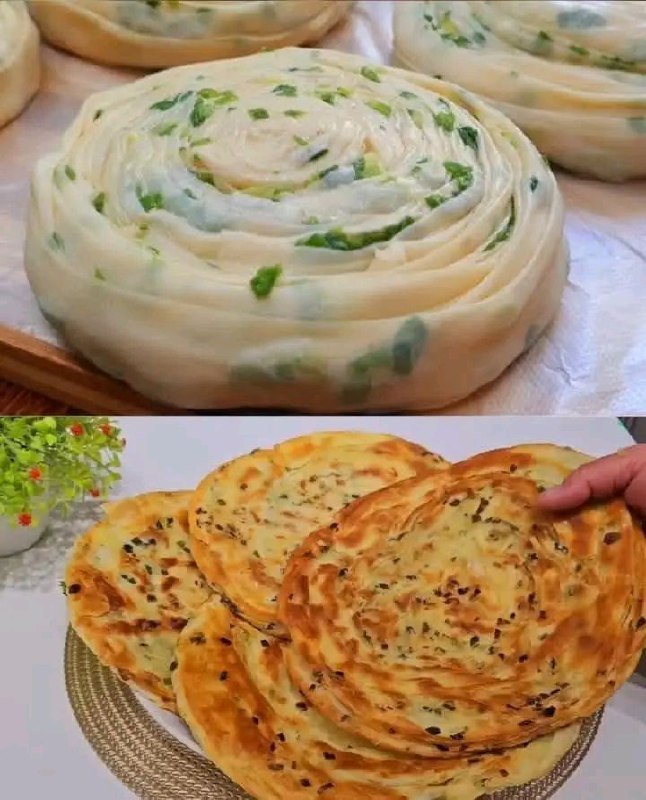
Flaky Chinese Scallion Pancakes

Get ready to elevate your snack game with these incredible Flaky Chinese Scallion Pancakes, also known as Cong You Bing! Imagine biting into a crispy, golden-brown exterior that shatters into countless delicate layers, revealing a soft, chewy interior infused with the savory aroma of fresh green onions. These aren’t your typical breakfast pancakes; they’re a culinary masterpiece of texture and flavor, perfect as an appetizer, a side dish, or a satisfying snack any time of day.
What makes these scallion pancakes truly special is their mesmerizing flakiness. Unlike Western pancakes, which rely on leavening agents, the magic here comes from a clever dough-rolling technique involving layers of oil and scallions, creating dozens of paper-thin sheets that separate beautifully when cooked. This recipe demystifies the process, making it accessible for even beginner home cooks to achieve that coveted, restaurant-quality crispness and savory goodness right in their own kitchen. Prepare to impress your taste buds and everyone around you with this irresistible creation!
Our method focuses on maximizing those glorious layers and achieving a perfect golden-brown finish, ensuring each bite delivers an explosion of savory scallion flavor and an utterly satisfying crunch. We’ll guide you through each step, from mixing the dough to mastering the crucial rolling and coiling techniques, guaranteeing a batch of scallion pancakes that are not only easy to make but also incredibly delicious and wonderfully flaky. Say goodbye to dense, heavy pancakes and hello to light, airy perfection!
Nutritional Information
Per serving (approximate values):
- Calories: 320
- Protein: 7g
- Carbohydrates: 45g
- Fat: 13g
- Fiber: 2g
- Sodium: 280mg
Ingredients
- 2 cups (240g) all-purpose flour, plus more for dusting
- ¾ cup (180ml) very hot water (about 180-200°F / 82-93°C)
- ¼ cup (60ml) cold water
- 1 teaspoon salt (for the dough)
- ½ cup (120ml) neutral oil (like vegetable, canola, or grapeseed), divided
- 1 cup (approx. 4-5 medium stalks) finely chopped green onions (scallions)
- ½ teaspoon salt (for the filling)
- ¼ teaspoon white pepper (optional)
- 1 tablespoon toasted sesame seeds (optional, for garnish)
Instructions
- Prepare the Dough: In a large mixing bowl, combine the all-purpose flour and 1 teaspoon of salt. Gradually pour in the very hot water, mixing with chopsticks or a wooden spoon until shaggy clumps form.
- Add Cold Water: Slowly add the cold water, continuing to mix until a rough dough comes together.
- Knead the Dough: Turn the dough out onto a lightly floured surface. Knead for 5-7 minutes until the dough is smooth and elastic. It should be soft but not sticky.
- Rest the Dough: Form the dough into a ball, lightly grease the bowl with a little oil, place the dough back in, cover with plastic wrap or a damp towel, and let it rest at room temperature for at least 30 minutes, or up to 2 hours. This step is crucial for developing gluten and making the dough easy to roll.
- Prepare the Oil Paste/Filling: While the dough rests, prepare the filling. In a small bowl, combine ¼ cup of the neutral oil with the ½ teaspoon salt and white pepper (if using). This will be your oil paste. In another bowl, have your finely chopped green onions ready.
- Divide the Dough: After resting, divide the dough into 4 equal portions. Lightly flour your work surface.
- Roll the First Portion: Take one portion of dough and roll it out into a very thin rectangle, approximately 12×8 inches (30×20 cm). The thinner the dough, the flakier your pancakes will be.
- Spread Oil Paste: Evenly brush about 1-2 tablespoons of the prepared oil paste over the entire surface of the rolled-out dough, leaving a small border around the edges.
- Sprinkle Scallions: Generously sprinkle ¼ of the chopped green onions over the oiled dough. If using, sprinkle a pinch of sesame seeds here too.
- Roll into a Log: Starting from one of the longer sides, tightly roll the dough into a long, thin log. Try to keep it as even as possible to ensure uniform layers.
- Coil the Log: Take the log and gently coil it into a spiral shape, like a snail shell. Tuck the end underneath.
- Rest Coiled Dough: Lightly press down on the coiled dough. Cover it with plastic wrap or a damp towel and let it rest for another 10-15 minutes. This again helps relax the gluten, making it easier to roll out without tearing. Repeat steps 7-12 for the remaining 3 dough portions.
- Flatten the Coils: After the second rest, take one coiled dough spiral. Gently flatten it with the palm of your hand, then use a rolling pin to roll it out into a flat, round pancake, about 6-8 inches (15-20 cm) in diameter and about ¼ inch (6mm) thick. Do not roll too thin, or you might lose some layers.
- Preheat Skillet: Heat 2-3 tablespoons of the remaining neutral oil in a large non-stick skillet or cast-iron pan over medium heat.
- Cook the Pancakes: Carefully place one rolled pancake into the hot oil. Cook for 3-5 minutes per side, or until golden brown and crispy, with visible flaky layers. The cooking time may vary depending on your stove and pan.
- Press While Cooking: As the pancake cooks, gently press down on it with a spatula to ensure even contact with the pan and to encourage flakiness.
- Drain and Serve: Once golden and crispy on both sides, remove the pancake from the skillet and place it on a wire rack lined with paper towels to drain any excess oil.
- Repeat: Repeat the cooking process for the remaining pancakes, adding more oil to the pan as needed.
- Serve Hot: Cut the pancakes into wedges or strips and serve immediately with your favorite dipping sauce.
Cooking Tips and Variations
Achieving the perfect flaky scallion pancake is all about technique and a few key details. For an ultra-flaky texture, ensure your dough is rolled as thinly as possible before adding the oil and scallions in step 7. The thinner the initial rectangle, the more layers you’ll create when you roll it into a log. Don’t be afraid to stretch the dough; if it resists, let it rest for a few minutes and try again. When spreading the oil paste, make sure it’s an even layer across the entire surface; this oil is what separates the dough layers during cooking, creating that signature flakiness. When you roll the dough into a log (step 10), roll it as tightly as you can without tearing. A tighter roll means more compressed layers, which translate to more distinct flakiness. Finally, when coiling the log into a spiral (step 11), try to keep it neat and compact. After coiling, gently press down on the spiral to flatten it slightly before the second rest; this helps maintain its shape. While cooking, resist the urge to flip the pancake too often. Let one side develop a good golden crust before flipping. Using a spatula to gently press down on the pancake as it cooks helps to ensure even browning and can also encourage the layers to separate and puff up.
To prevent your pancakes from becoming too oily or soggy, make sure your pan is heated to the correct medium temperature before adding the oil and the pancake. If the oil isn’t hot enough, the pancake will absorb too much. If it’s too hot, the outside will burn before the inside cooks through. After cooking, always place the pancakes on a wire rack over paper towels to drain any excess oil; this keeps them crispy. If your dough is too sticky during kneading, add a tiny bit more flour. If it’s too dry and hard to knead, add a teaspoon of cold water at a time until it’s pliable. If your pancakes aren’t flaky, it’s usually due to not rolling the dough thin enough initially, not spreading enough oil paste, or not rolling the log tightly enough. Don’t worry, practice makes perfect!
For variations, consider adding a pinch of five-spice powder to your oil paste for an extra aromatic kick. You can also mix in a small amount of finely minced garlic or ginger with the scallions for a different flavor profile. For a spicier pancake, finely chop a small bird’s eye chili and mix it with the scallions. You can also experiment with different flours; while all-purpose is classic, some recipes use a blend of all-purpose and bread flour for a chewier texture. For a vegetarian option, this recipe is already perfect. For a vegan option, just ensure your oil is plant-based. You can even make a larger batch of the coiled dough and freeze it unrolled for later; just thaw in the fridge before rolling and cooking.
Storage and Reheating
Cooked scallion pancakes are best enjoyed fresh, hot, and crispy straight from the pan. However, if you have leftovers, you can store them. Allow the pancakes to cool completely to room temperature before storing. Stack them with parchment paper in between each pancake to prevent them from sticking together. Place them in an airtight container or a freezer-safe bag. They can be stored in the refrigerator for up to 3 days or in the freezer for up to 1 month.
To reheat refrigerated scallion pancakes and maintain their flakiness, the best method is to use a dry skillet or a toaster oven. Avoid the microwave, as it will make them soft and chewy rather than crispy. For a skillet, heat a non-stick pan over medium heat (no oil needed if they already have some leftover oil from cooking, otherwise, a tiny drizzle). Place the pancake in the hot pan and reheat for 2-3 minutes per side, or until heated through and crispy again. For a toaster oven, preheat it to 350°F (175°C) and toast the pancakes for 5-7 minutes, or until hot and crispy. If reheating from frozen, you can reheat them directly in a skillet or toaster oven, but they may take a few minutes longer to heat through.
Frequently Asked Questions
What is the difference between scallion pancakes and other pancakes?
Chinese scallion pancakes (Cong You Bing) are distinctly different from Western breakfast pancakes. Western pancakes are typically sweet, made with a batter, leavened with baking powder or soda, and cooked on a griddle to be fluffy. Scallion pancakes, on the other hand, are savory, made from an unleavened dough that is rolled, oiled, and folded multiple times to create many thin, flaky layers. They are pan-fried until crispy and are served as an appetizer or side dish, not usually for breakfast with syrup.
Can I make the dough ahead of time?
Yes, absolutely! Making the dough ahead of time can actually improve its texture. You can prepare the dough up to step 4 (after the initial knead and rest). After resting, wrap the dough ball tightly in plastic wrap and store it in the refrigerator for up to 24 hours. When you’re ready to use it, let it come to room temperature for about 30 minutes before dividing and proceeding with the rolling, oiling, and coiling steps. You can also prepare the coiled dough (step 12) and refrigerate or freeze it before the final rolling and cooking.
Why are my scallion pancakes not flaky?
Several factors can lead to less-than-flaky scallion pancakes. The most common reasons include not rolling the initial dough rectangle thin enough, not spreading enough oil paste evenly over the dough (the oil creates the separation), or not rolling the dough log tightly enough. It’s also important to give the dough enough resting time after kneading and after coiling, as this relaxes the gluten and makes it easier to roll thinly without tearing. Practice with the rolling and layering technique is key to achieving that signature flakiness.
What are some good dipping sauces for scallion pancakes?
Scallion pancakes are fantastic on their own, but a good dipping sauce enhances the experience. A classic dipping sauce is a simple mix of soy sauce, rice vinegar, a touch of sesame oil, and a pinch of sugar. You can also add a sprinkle of chili flakes or finely minced garlic for extra flavor. Other popular options include a sweet chili sauce, a spicy sriracha mayo, or a more elaborate ginger-garlic soy sauce. Experiment to find your favorite combination!