Follow Me On Social Media!
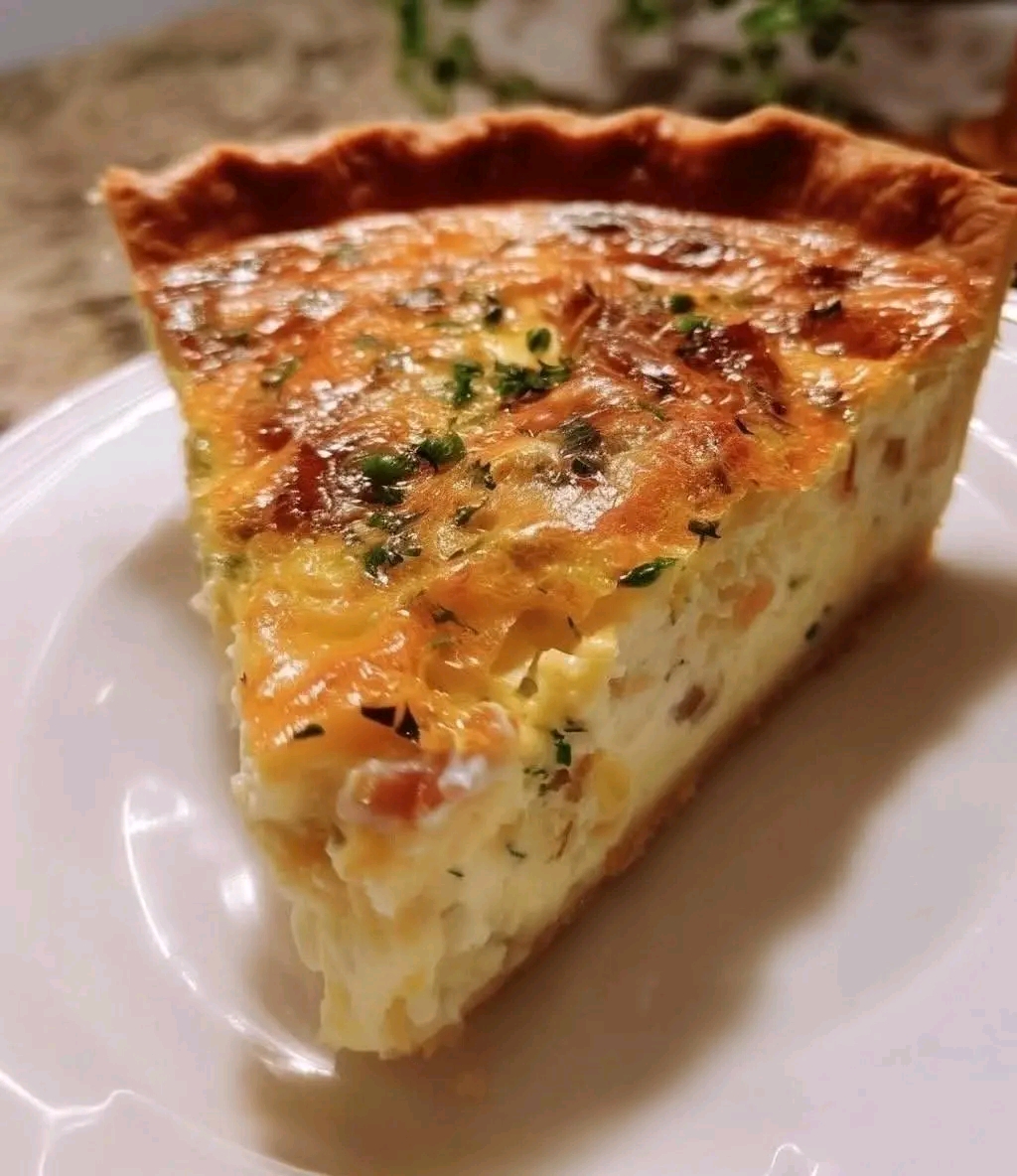
How to Make Bacon and Cheddar Quiche

Introduction
A bacon and cheddar quiche is a classic savory pie that combines crisp, smoky bacon, sharp cheddar cheese, and a creamy egg custard, all baked inside a flaky crust. It’s perfect for breakfast, brunch, lunch, or even a light dinner. The great thing about quiche is its flexibility: you can add vegetables, herbs, different cheeses, or change the crust to suit your preferences or dietary needs.
In this article you’ll learn:
- What makes a good quiche (texture, flavor, custard balance)
- How to choose or make a crust
- How to cook and prepare the bacon and cheese
- How to assemble the filling and avoid soggy crusts
- Step‑by‑step baking instructions
- Tips, variations, and troubleshooting
Let’s get started!
The Basics: What Is a Quiche?
A quiche is a savory custard tart. It has a pastry shell (often shortcrust) filled with a mixture of eggs and dairy (cream, milk, or half‑and‑half), and then additional ingredients like meats, cheeses, vegetables, or herbs.
The classic version is quiche Lorraine, which traditionally has bacon (or lardons) and sometimes onions but no cheese. Over time, additions such as cheese have become common in many quiche variations.
In our case, the “bacon and cheddar quiche” combines the smoky flavor of bacon with sharp cheddar melted into the custard, giving a rich, savory, and comforting profile.
A well‑made quiche should have:
- A set but tender custard — not rubbery or watery
- A flaky, crisp crust that holds the filling and doesn’t get soggy
- Good distribution of bacon and cheese so every slice has flavor
- A lightly browned top but not overly browned or burnt
Ingredients and What to Look For
Here’s a typical ingredient list, with optional swaps and what to watch out for.
Crust
You can use:
- Store‑bought pie crust or refrigerated pie dough (for convenience)
- Homemade shortcrust pastry
- Alternative crusts, like hash brown crust, potato crust, or even a crustless version
Using a good crust is essential, because if the crust gets soggy from the custard, your quiche will lose its appeal.
If you make your own shortcrust pastry, typical ingredients are:
- All‑purpose flour
- Cold unsalted butter (or a mix of butter + a little shortening)
- A pinch of salt
- Ice water to bring the dough together
If you prefer convenience, a good quality refrigerated crust works well.
Eggs and Dairy
The custard base is typically:
- Eggs (often 4 to 8 depending on quiche size)
- Cream, half‑and‑half, or a mixture of milk + cream
Heavy cream gives a richer, more luxurious texture; half‑and‑half or milk lightens the custard (but may make it a bit more delicate). Many recipes use half‑and‑half or a mix.
You’ll also season the custard with salt, pepper, and optionally mustard powder, nutmeg, or other spices to enhance flavor.
Bacon
Use good quality bacon (smoked, thick cut is nice) and cook it until crisp (or nearly so). Drain it well so excess grease doesn’t make the quiche greasy. Cut it into bite‑sized pieces or lardons.
You can also use pancetta, ham, or bacon bits, but fresh cooked bacon gives the best flavor.
Cheddar Cheese
Sharp or medium cheddar is a popular choice. The sharper the cheese, the stronger it will stand up to the richness of the custard and bacon. Grate it fresh for best melting.
You can also mix cheddar with other cheeses like Gruyère, Swiss, or mozzarella for more complexity.
Optional Add‑Ins
- Sautéed onions or leeks
- Spinach, mushrooms, bell peppers
- Fresh herbs (parsley, chives, thyme)
- Mustard (a little Dijon or mustard powder in the custard)
- Garlic, black pepper, or nutmeg
One variation from Olive Magazine includes leeks along with bacon and cheddar.
Another version uses a hash brown crust instead of pastry.
Equipment You’ll Need
- Pie dish (typically 9‑inch) or tart pan
- Rolling pin (if using homemade crust)
- Mixing bowls
- Whisk
- Skillet or frying pan for cooking bacon
- Baking sheet (put your pie dish on it to catch spills)
- Aluminum foil or a pie crust shield (to protect crust edges)
- Cooling rack
Step‑by‑Step Instructions
Below is a detailed walkthrough for making a classic bacon and cheddar quiche, from crust to final bake.
1. Prepare the Crust
If using a store crust, allow it to rest at room temperature a bit (per package directions) so it’s easier to roll or unroll.
If making your own pastry:
- In a food processor or mixing bowl, combine flour + salt, then cut in cold butter, until mixture resembles coarse crumbs.
- Gradually add ice water, a tablespoon at a time, just until the dough comes together (don’t overmix).
- Shape into a disk, wrap, and chill in the refrigerator for at least 30 minutes.
When rolling out:
- Lightly flour your work surface
- Roll the dough to about 1/8 to 3/16 inch thick (for a 9‑inch pie dish)
- Gently lift and transfer into the pie dish, pressing it slightly into the sides
- Trim excess dough, leaving an overhang, then fold under and crimp or flute the edges
Then blind bake (par‑bake) to help prevent sogginess:
- Prick the bottom with a fork
- Line with parchment paper or foil
- Fill with pie weights or dried beans
- Bake at ~ 400–425 °F (200–220 °C) for 10 to 15 minutes until edges lightly golden
- Remove weights and bake a few more minutes (or reduce heat) until bottom is set
- Remove parchment or foil and allow crust to cool slightly
Many recipes follow this approach.
If your crust edges begin to brown too quickly during the final bake, shield them with foil or a pie crust protector.
2. Cook the Bacon (and Other Fillings)
- Cut bacon into small pieces or lardons
- Cook in a skillet over medium heat until crisp (or nearly crisp)
- Remove to paper towels to drain excess fat
- Optionally reserve a bit of bacon fat for sautéing vegetables (if using onions, leeks, etc.)
If you’re using onions or leeks, you can sauté them in a little of the bacon fat until softened and slightly caramelized, then let cool before mixing into the filling. Olive Magazine’s version does this with leeks.
Let cooked bacon (and any sautéed vegetables) cool somewhat before combining with the custard.
3. Prepare the Custard Filling
In a mixing bowl:
- Crack in the eggs
- Add cream, half‑and‑half, or milk
- Add salt, pepper, and any spices (mustard powder, nutmeg, etc.)
- Whisk until smooth and well combined
Then stir in:
- Grated cheddar
- Cooked bacon and any vegetables or herbs
Be careful not to overfill — leave a bit of headspace so the custard doesn’t overflow while baking.
Some recipes suggest mixing cheese first, then adding the wet ingredients.
4. Assemble the Quiche
- Place the par-baked crust on a baking sheet
- Spread the bacon (and vegetable) mixture evenly across the crust
- Pour the custard (egg + dairy + cheese) mixture over the bacon and fillings
- Gently tap or shake the pan to release air bubbles and help the filling settle into cracks
If any pieces of crust are sticking above the custard, gently press them down so they are submerged — you want a level top.
5. Bake the Quiche
- Preheat oven (often 350 °F / 175 °C)
- Bake for 35 to 50 minutes, or until the custard is mostly set but still slightly wobbly in the very center
- Check doneness by inserting a knife near the center — if it comes out clean (or nearly so), it’s done
- If the top or crust edges brown too much, cover with foil
- Remove from oven and allow to cool for 10–20 minutes before slicing
Many recipes follow a two-stage baking: start hot, then reduce heat, or bake at a steady moderate temperature. For example, one recipe preheats to 425 °F then reduces to 325 °F for the rest of the baking.
Another version using 425 °F followed by a lower heat for the remainder is common.
6. Rest, Slice, and Serve
Let the quiche rest and cool a bit before slicing — this helps it set completely and avoids overly runny slices. Serve warm or room temperature. Quiche is also good cold.
You may optionally top with fresh herbs (chives, parsley) or a light sprinkle of extra cheddar before serving.
Full Example Recipe (Quantities)
Here’s a complete recipe version you can follow, adapted from several sources:
Ingredients (for a 9‑inch quiche, serves about 6):
- 1 (9‑inch) pie crust (store‑bought or homemade)
- 6 large eggs
- 1 cup heavy cream (or half cream / half milk)
- 1/2 cup milk or half‑and‑half (if you use a mix)
- 1 to 1½ cups sharp cheddar cheese, grated
- 6 slices bacon, cooked and crumbled
- 1/2 teaspoon salt
- 1/4 teaspoon black pepper
- Optional: 1 small onion or leek, finely chopped and sautéed
- Optional: pinch of nutmeg or 1 teaspoon mustard powder
- Optional: fresh herbs for garnish
Instructions:
- Preheat oven to about 400–425 °F (200–220 °C).
- Blind bake the crust: line with parchment + pie weights, bake ~10–15 min, remove weights, bake a few more min until set.
- In a skillet, cook bacon until crisp. Drain and crumble. Optionally sauté onion in reserved bacon fat and let cool.
- In a bowl, whisk eggs, cream, milk, salt, pepper, and optional spices until smooth.
- Stir in cheese, bacon, and any vegetables/herbs.
- Place crust on a baking sheet. Spread fillings in the crust. Pour custard over them, letting it settle.
- Bake in preheated oven, then reduce heat if needed, for 35–50 minutes, until custard is set (knife comes out clean).
- Remove, cool for 10–20 minutes, slice, garnish, serve.
This version is similar to the method in Carrie’s Experimental Kitchen.
Another variant uses 8 slices of bacon and 2 cups cheese, plus half‑and‑half, with blind baking at 425 °F then baking at 350 °F.
Olive Magazine’s version with leeks uses 4 eggs, 200 ml cream, 100 g cheddar, etc.
Tips, Tricks, and Troubleshooting
Here are many helpful pointers to improve your quiche and avoid common pitfalls.
Avoid a Soggy Crust
- Blind bake the crust so it develops some structure before filling.
- Dock (poke) the crust bottom to let steam escape.
- Use paper + weights (beans, rice) to hold crust shape during blind bake.
- Don’t overfill; if there’s too much liquid, it might seep into crust before baking.
- Make sure your bacon and vegetables are well drained/cooked to reduce extra moisture.
Custard Texture Tips
- Ratio rule of thumb: about 1 part egg to 1 to 1.5 parts dairy (by volume) works well.
- Use whole eggs (not just whites), as yolks help richness and binding.
- Don’t overwhisk so much that you incorporate too many air bubbles (this can cause holes).
- Bake until the custard is nearly set — a little wobble in the center is okay; it will finish setting as it cools.
- Avoid overbaking, which can cause a rubbery texture or cracked top.
Cheese and Bacon Distribution
- Mix cheese and bacon thoroughly in the custard so they are evenly distributed.
- If cheese floats to top, slices may have too much cheese on top — combine carefully.
- Use freshly grated cheese (shreds from the block) rather than pre-shredded mixes (which often have anti‑caking agents).
Controlling Browning
- If the top or crust edges are browning too much before the filling sets, tent with foil.
- Use a pie crust shield (or foil ring) to protect edges while the center bakes.
Cooling and Slicing
- Let the quiche rest 10–20 minutes after baking to firm up the custard.
- Use a sharp, serrated or thin knife for cleaner slices.
- Wipe the knife between cuts to reduce dragging melted cheese.
Make‑Ahead and Freezing
- You can bake the quiche ahead, cool fully, wrap tightly, and reheat in oven.
- Some recipes suggest freezing fully baked quiche (wrapped) for up to a few months. For example, the Delicious Magazine version suggests freezing and reheating.
- Reheat in a moderate oven (~ 325–350 °F / 160–175 °C) until warmed through.
Variations and Alternative Crusts
- Hash Brown Crust: Instead of pastry, use shredded hash browns mixed with cheese and pressed into pan, then par-bake.
- Crustless Quiche: Omit the crust altogether, greasing the pie pan well. This is lower carb. (Many keto/low carb recipes do this)
- Mixed Cheeses: Try cheddar + Gruyère, Swiss, mozzarella
- Vegetables: Add spinach, mushrooms, bell pepper, zucchini (pre-cook/saute to reduce moisture)
- Herbs & Spices: Add fresh parsley, chives, thyme, or a pinch of nutmeg or mustard powder
One low‑carb version uses bacon–cheddar crisps as a base crust.
Flavor Enhancements
- Add a teaspoon of Dijon mustard or mustard powder to the custard for depth
- Use a pinch of ground nutmeg to complement the creaminess
- Use smoked bacon for a stronger smoky flavor
- Stir in fresh chopped herbs after baking for brightness
Serving Suggestions
- Serve slices with a light green salad dressed in vinaigrette
- Pair with fresh fruit or tomato salad
- Use quiche slices as part of a brunch spread with pastries, juices, coffee
- Quiche can be served warm, room temperature, or cold
Sample Timeline for Making Quiche
Here’s a suggested timeline to help you manage the steps smoothly:
- 0:00 — Gather ingredients and equipment
- 0:05 — Make the pastry (if from scratch) and chill it
- 0:35 — Preheat oven and roll out pastry, line pie dish
- 0:45 — Blind bake crust
- 0:55 — Cook bacon and optional vegetables
- 1:05 — Prepare custard, combine with bacon/cheese
- 1:10 — Pour into crust and bake
- 1:40 — Check, maybe tent with foil, continue baking
- 1:50 — Remove oven, let cool 10–20 minutes
- 2:00 — Slice and serve
If you make the pastry ahead or use a store crust, you can start later and finish earlier.
Common Mistakes & How to Avoid Them
| Mistake | Problem | Remedy / Prevention |
|---|---|---|
| Soggy crust | Moisture from filling soaks into crust | Blind bake crust, drain bacon/veggies well, don’t overfill |
| Overbaked custard | Rubberiness, cracks appear | Remove when center is just set (slight wobble) |
| Underbaked custard | Runny in center | Bake longer at moderate heat, test with knife |
| Uneven filling | Some slices have too much cheese or bacon | Mix filling well and pour carefully |
| Burned crust edges | Edges brown too fast | Use foil shield or tent edges |
| Filling overflow | Filling level too high or crust not fully sealed | Leave headspace, press pastry edges inward |
| Cold ingredients | Custard doesn’t mix well or crust won’t bake properly | Let eggs/cream come closer to room temp before mixing |
Why This Recipe Works (Flavor & Texture Insights)
- The combination of bacon and cheddar gives a balance of smoky, salty, and sharp flavors that complement the creamy custard.
- Blind baking the crust ensures that the bottom is firm enough to resist moisture from the custard, giving a crisp base.
- The custard made with eggs + dairy yields a rich, velvet texture if baked gently.
- Use of fresh cheese and well drained bacon means less extra moisture and better melting distribution.
- Letting it rest after baking helps the custard fully set and makes cleaner slices.
Nutrition & Serving Considerations
This is a rich dish. A typical slice may contain a good amount of fat and calories, especially with cream and bacon. For lighter versions:
- Use half cream / half milk or lower-fat dairy
- Reduce bacon quantity or use leaner ham
- Use vegetables (spinach, mushrooms) to bulk up filling
- Use a thinner crust or make a crustless version
Still, quiche is satisfying and can be part of a balanced meal when paired with a fresh salad.
Final Thoughts & Summary
Here’s a succinct version of the method:
- Prepare and blind bake the crust
- Cook and drain bacon (and sauté any vegetables)
- Whisk eggs + dairy + seasoning
- Stir in cheese, bacon, and add‑ins
- Pour into crust, bake until set
- Cool, slice, serve
You can adapt this recipe in many ways — crust, cheese blends, vegetables, herbs. The principles remain the same: control moisture, get a good crust, and don’t overbake the custard.