Follow Me On Social Media!
How to Make Perfect Scrambled Eggs Every Time

Introduction
Ah, scrambled eggs. For many, they’re the quintessential breakfast food, a comforting start to the day, or a quick, satisfying meal anytime. Yet, despite their apparent simplicity, truly perfect scrambled eggs often feel elusive. Have you ever ended up with dry, rubbery curds that resemble packing peanuts more than a fluffy cloud? Or perhaps a watery, unappetizing mess? You’re not alone! The quest for that ideal, creamy, melt-in-your-mouth texture can be a frustrating journey of trial and error.
But what if I told you that achieving scrambled egg perfection isn’t a mystical art, but a simple science? This isn’t about fancy ingredients or complicated techniques. It’s about understanding a few fundamental principles that elevate humble eggs into a culinary masterpiece. This guide is your passport to consistently delicious, unbelievably creamy scrambled eggs every single time you step up to the stove. Forget everything you thought you knew about frantic whisking and high heat – we’re about to unlock the secrets to breakfast bliss.
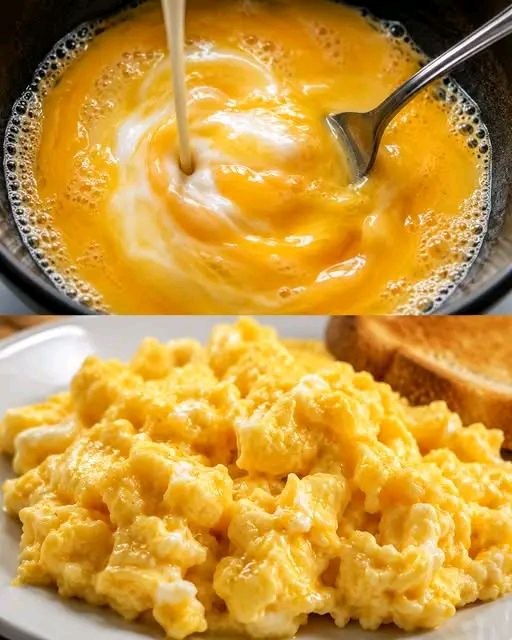
The “perfect” scrambled egg, in my humble opinion, is not overcooked and dry, nor is it raw and runny. It’s a delicate balance: soft, tender curds that are just set, still glistening with moisture, and bursting with rich, eggy flavor. It’s the kind of scrambled egg that makes you close your eyes and savor each bite. We’ll be focusing on a low-and-slow approach, incorporating a touch of dairy, and mastering the timing to ensure your eggs are consistently cooked to tender, creamy perfection. Get ready to impress yourself and anyone lucky enough to share your breakfast table!
Nutritional Information
Per serving (approximate values):
- Calories: 200
- Protein: 12g
- Carbohydrates: 1g
- Fat: 16g
- Fiber: 0g
- Sodium: 200mg
Ingredients
- 3 large fresh eggs
- 1 tablespoon whole milk, half-and-half, or heavy cream (for extra richness)
- 1 teaspoon unsalted butter
- Pinch of salt
- Freshly ground black pepper, to taste
- Optional: Fresh chives or parsley, finely chopped, for garnish
Instructions
- Prepare Your Eggs: In a medium bowl, crack the three large eggs. Add the tablespoon of whole milk, half-and-half, or heavy cream.
- Whisk Gently: Using a fork or a whisk, beat the eggs and dairy together until the yolks and whites are fully combined and the mixture is a uniform pale yellow color. Do not over-whisk; you don’t want to incorporate too much air, as this can make the eggs foamy and less creamy. A few seconds of gentle whisking is usually sufficient.
- Heat the Pan: Place a small (8-inch) non-stick skillet over low to medium-low heat. This low heat is crucial for preventing overcooking and achieving that creamy texture. Add the teaspoon of unsalted butter to the pan.
- Melt the Butter: Allow the butter to melt completely and coat the bottom of the pan. Swirl the pan to ensure even coverage. The butter should be melted and just starting to foam, but not browned.
- Pour in Eggs: Once the butter is melted, pour the egg mixture into the heated pan. Do not stir immediately. Let the eggs sit undisturbed for about 30-60 seconds, allowing a thin layer to set at the bottom. You should see the edges just beginning to firm up.
- Begin to Scramble: Using a heat-resistant rubber spatula, gently push the cooked egg from one side of the pan towards the center, allowing the uncooked egg to flow into the empty space.
- Continue Folding: Continue this gentle folding motion, pushing the eggs from the edges to the center and then across the pan. As the eggs cook, large, soft curds will begin to form. Resist the urge to stir vigorously or break the curds into very small pieces; larger, softer curds contribute to the creamy texture.
- Cook Low and Slow: Keep the heat low and continue to gently fold and push the eggs. This process should take 3-5 minutes, depending on your stovetop and desired doneness. The goal is to cook the eggs slowly and evenly, preventing them from browning or becoming rubbery.
- Remove from Heat: When the eggs are mostly set but still look slightly wet and glossy in places (this is key!), remove the pan from the heat. Remember, the eggs will continue to cook for a moment or two from their residual heat (carryover cooking). They should not be completely dry in the pan.
- Season and Serve: Immediately sprinkle with a pinch of salt and freshly ground black pepper to taste. If using, stir in fresh chives or parsley. Gently transfer the scrambled eggs to a warm plate and serve immediately. Enjoy your perfectly creamy scrambled eggs!
Cooking Tips and Variations
Achieving perfect scrambled eggs is a delicate dance between heat, timing, and technique. Here are some essential tips to master the art and a few variations to keep things interesting:
- Embrace Low and Slow Heat: This is arguably the most critical factor. High heat causes eggs to cook too quickly, leading to dry, tough, and rubbery curds. Low to medium-low heat allows the proteins to set gently, resulting in a custardy, tender texture. Be patient; good things come to those who wait!
- Don’t Over-Whisk: While you want the yolks and whites fully combined, aggressive whisking that incorporates too much air can lead to foamy, less creamy eggs. A gentle whisk with a fork until just combined is perfect.
- The Dairy Dilemma: A splash of dairy (milk, half-and-half, or cream) adds richness and helps prevent the eggs from becoming dry. Whole milk is great, but half-and-half or heavy cream will yield an even silkier, more decadent result.
- Butter Matters: Use unsalted butter for the best flavor and to control the salt content. Don’t skimp on it; butter adds flavor and helps prevent sticking.
- Non-Stick is Your Friend: A good quality non-stick skillet is highly recommended. It makes cleanup a breeze and ensures your beautiful eggs don’t get stuck to the pan.
- The Carryover Cooking Effect: Eggs continue to cook even after they’re removed from the heat. Always pull them off the stove when they still look slightly underdone and wet. They will firm up to perfect tenderness on the plate. If they look perfectly done in the pan, they’ll be overcooked by the time they reach your mouth.
- Season at the End: Add salt and pepper *after* the eggs are cooked. Adding salt too early can break down the egg proteins, making them watery or tough.
- Don’t Over-Stir: Gentle folding with a spatula creates those lovely, soft curds. Constant, aggressive stirring will break them down into tiny, unappealing pieces.
- Serving Immediately: Scrambled eggs are best enjoyed fresh off the pan. Their texture and warmth are at their peak.
Variations:
- Cheesy Scrambled Eggs: Add 1-2 tablespoons of shredded cheese (cheddar, Gruyère, Monterey Jack, or goat cheese work well) during the last minute of cooking. Stir gently until melted and incorporated.
- Herbaceous Scrambled Eggs: Stir in 1 tablespoon of finely chopped fresh herbs like chives, parsley, dill, or tarragon just before serving for a burst of fresh flavor.
- Spicy Scrambled Eggs: Add a pinch of red pepper flakes or a dash of hot sauce to the egg mixture before cooking, or top with a drizzle of sriracha after plating.
- Veggie-Loaded Scrambled Eggs: Sauté finely diced vegetables (onions, bell peppers, spinach, mushrooms) in a separate pan until tender. Stir them into the eggs during the last minute of cooking.
- Smoked Salmon Scramble: Fold in small pieces of smoked salmon and a sprinkle of fresh dill after the eggs are cooked and removed from the heat.
- Mediterranean Scramble: Crumble in a tablespoon of feta cheese and add a pinch of dried oregano towards the end of cooking.
Storage and Reheating
While scrambled eggs are undeniably best enjoyed fresh, sometimes you end up with leftovers or want to meal prep. Here’s how to handle storage and reheating:
Storage:
- Cool Quickly: Allow any leftover scrambled eggs to cool to room temperature as quickly as possible (within 30 minutes) to prevent bacterial growth.
- Airtight Container: Transfer the cooled eggs to an airtight container.
- Refrigerate: Store in the refrigerator for up to 2-3 days. Beyond that, the texture and flavor will significantly degrade.
Reheating:
Reheating scrambled eggs can be tricky, as they tend to dry out and become rubbery. The goal is to reheat gently and quickly.
- Microwave (Fastest, but Tricky):
- Place the cold scrambled eggs in a microwave-safe dish.
- Add a tiny splash (1 teaspoon) of milk or water over the eggs to help reintroduce moisture.
- Heat on 50% power for 30-second intervals, stirring gently after each interval.
- Continue until just warmed through. Be careful not to overheat, as this will make them rubbery.
- Stovetop (Best Quality):
- Melt a small pat of butter (about 1/2 teaspoon) in a non-stick skillet over low heat.
- Add the cold scrambled eggs to the pan.
- Add a tiny splash (1 teaspoon) of milk or water.
- Gently break up the eggs and stir them around the pan, warming them slowly.
- Continue until just heated through, about 2-3 minutes. Again, avoid high heat or prolonged cooking.
- Air Fryer (Surprisingly Good for Small Portions):
- Preheat your air fryer to 250°F (120°C).
- Place the scrambled eggs in an air fryer-safe dish or directly on parchment paper in the basket.
- Cook for 3-5 minutes, shaking the basket or stirring halfway through, until heated through. Keep a close eye on them to prevent drying.
Important Note: Reheated scrambled eggs will never be quite as good as freshly made ones. Their texture will be firmer, and they might lose some of their original creaminess. For the best experience, try to make only as much as you need.
Frequently Asked Questions
Why do my scrambled eggs turn out rubbery?
The most common culprit for rubbery scrambled eggs is cooking them over too high heat or cooking them for too long. High heat causes the egg proteins to seize up and expel moisture rapidly, leading to a tough, dry texture. Our low-and-slow method, combined with pulling them off the heat when they’re still slightly wet, prevents this, ensuring a creamy, tender result.
Should I add milk or water to my scrambled eggs?
Adding a small amount of dairy (milk, half-and-half, or cream) is highly recommended. It adds richness, helps create a softer curd, and prevents the eggs from drying out. Water can also work in a pinch for moisture, but it won’t contribute to the flavor or richness in the same way dairy does. For the creamiest eggs, opt for half-and-half or heavy cream.
When should I season my scrambled eggs?
It’s best to add salt and pepper to your scrambled eggs *after* they are cooked and removed from the heat. Adding salt too early can draw moisture out of the eggs, potentially making them watery or causing the proteins to clump and become tough. Seasoning at the end allows you to taste and adjust perfectly without affecting the cooking process.
What’s the best pan for scrambled eggs?
A good quality non-stick skillet, preferably 8-inches for 2-3 eggs, is ideal for making scrambled eggs. The non-stick surface ensures the eggs don’t stick to the bottom, making it easier to create soft curds and preventing any burnt bits. It also makes cleanup significantly easier.